



















Building a Data Pipeline? Don’t Overlook These 7 Factors

In today’s economy, data isn’t just valuable; it’s foundational. Businesses across every industry rely on a constant flow of accurate, timely data to power analytics, drive machine learning models, inform strategic decisions, and personalize customer experiences. At the heart of this data-driven ecosystem lies the humble yet critical data pipeline – the intricate network of processes and technologies responsible for moving data from its source to its destination, transforming it along the way.
What is Data Pipeline?
Data Pipeline:
A system that automatically moves data from one or more source systems through a series of processing steps (extraction, transformation, quality checks) to a destination (data warehouse, data lake, analytics platform) — making data available for reporting, machine learning, or operational use. Data pipelines are the foundational infrastructure of every data-driven organization.
ETL vs ELT:
Two data pipeline architectures: ETL (Extract, Transform, Load) extracts data from sources, transforms it in a processing layer, then loads clean data to the destination — traditional approach suited for relational databases. ELT (Extract, Load, Transform) loads raw data to the destination first, then transforms it using the destination’s compute power — preferred for cloud data warehouses (Snowflake, BigQuery, Redshift) where compute is cheap and transformations on raw data enable reprocessing.
Idempotency:
A pipeline design principle where re-running a pipeline step produces the same result as running it once — critical for error recovery. An idempotent pipeline can be safely re-executed after a failure without creating duplicate records or corrupted state. Achieving idempotency requires: upsert logic (insert or update rather than blind insert), timestamp-based deduplication, and atomic transaction handling.
Schema Evolution:
The ability of a data pipeline to handle changes in the structure of source data — added columns, renamed fields, changed data types — without breaking downstream consumers. Unhandled schema changes are one of the most common data pipeline failure causes. Schema evolution strategies include: schema registry (Confluent Schema Registry for streaming data), schema detection and automated migration, and defensive transformation code that handles nullable new fields gracefully.
Building data pipelines – the systems that reliably move data from sources (like your game’s SDK), transform it (like aggregating level attempts), and load it into destinations (like a data warehouse for analysis) – is far more complex than just connecting pipes. It involves weaving together tools and processes for ingestion, integration, quality checks, orchestration, governance, and monitoring into a cohesive, resilient system.
As highlighted by the challenges mentioned in data engineering discussions, common pitfalls include:
-
- Scaling Issues: Handling exponential increases in data volume and velocity.
- Integration Complexity: Adding new, diverse data sources without breaking the system.
- Schema Evolution & Data Drift: Adapting to changes in data structure and unexpected variations.
- Data Quality: Ensuring accuracy, completeness, and consistency despite messy real-world data.
- Timeliness: Delivering data fast enough for relevant analysis and decision-making.
Simply reacting to these challenges isn’t enough. You need to proactively design pipelines with the future in mind. Based on industry best practices and common failure points, here are 7 critical factors you absolutely cannot afford to overlook:
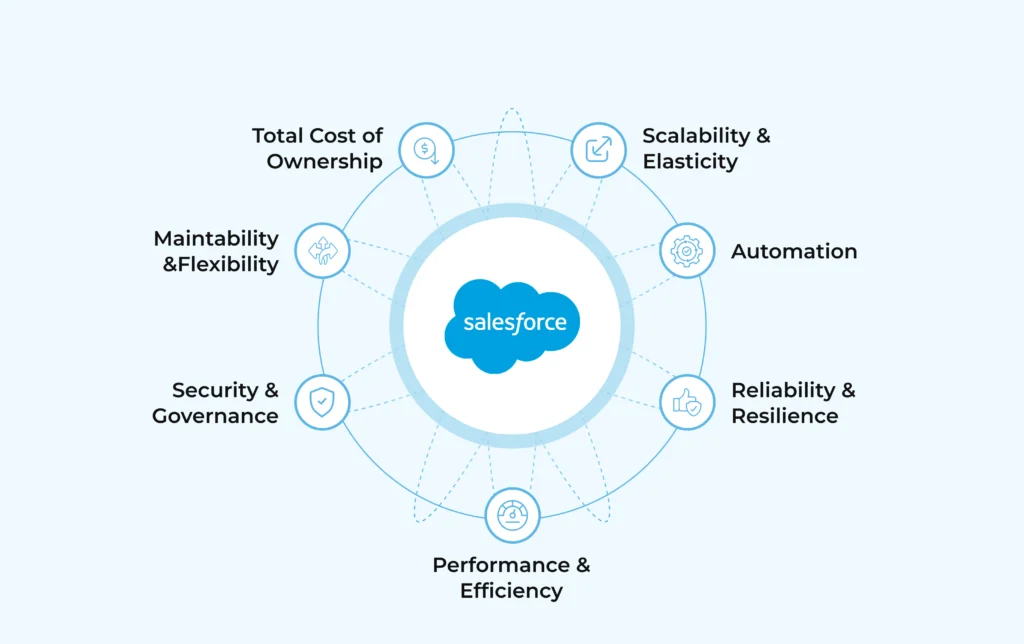
7 key Factors in Data Pipeline Development
1. Scalability & Elasticity: Planning for the Flood, Not Just the Trickle
Your viral game scenario perfectly illustrates this. Scalability isn’t just about handling more data; it’s about handling orders of magnitude more, often unpredictably. Elasticity adds the dimension of automatically scaling resources up and down to match demand efficiently.
-
- Why It’s Overlooked: Initial designs often focus on current needs to save time or cost. Teams might underestimate growth potential or choose familiar tools that lack inherent scaling capabilities. The complexities of distributed processing can seem daunting initially.
- The Devastating Impact: Bottlenecks emerge everywhere – ingestion endpoints, processing nodes, database writes. Processing times skyrocket, SLAs are missed, and the system becomes unstable.
Don’t Overlook This:
-
- Embrace Cloud-Native: Leverage cloud platforms (AWS, Azure, GCP) designed for elasticity. Use services like serverless functions (Lambda, Cloud Functions), managed container orchestration (Kubernetes – EKS, GKE, AKS), and scalable data processing services (EMR, Dataproc, Databricks, Snowflake). These often auto-scale based on load.
- Distributed Processing: For large volumes, use frameworks like Apache Spark or Flink that distribute computation across multiple nodes. Understand how data partitioning works within these frameworks to ensure even distribution.
- Decouple Components: Use message queues (Kafka, Pulsar, SQS, Pub/Sub) to buffer data between stages. This decouples ingestion from processing, allowing each to scale independently.
- Scalable Storage: Choose data storage solutions (like data lakes built on S3/ADLS/GCS, or scalable data warehouses like BigQuery, Redshift, Snowflake) designed for massive scale and concurrent access.
2. Automation: Reducing Toil, Ensuring Consistency
Data pipelines involve many repetitive tasks: scheduling jobs, triggering workflows based on events (like new file arrival), validating schemas, running quality checks, deploying updates, and monitoring performance. Manual execution is inefficient, error-prone, and unscalable.
-
- Why It’s Overlooked: Setting up robust automation requires upfront investment in tooling and configuration. Teams might initially rely on manual scripts or basic cron jobs, underestimating the complexity as the pipeline grows.
- The Devastating Impact: Manual processes lead to inconsistencies, human error, and significant delays. Troubleshooting becomes difficult without standardized execution logs. Onboarding new team members is harder. Valuable engineering time is wasted on repetitive operational tasks (“toil”) instead of value-added development.
Don’t Overlook This:
-
- Orchestration Tools: Use workflow management tools like Apache Airflow, Prefect, Dagster, or cloud-native options like AWS Step Functions or Azure Data Factory to define, schedule, and monitor complex dependencies between pipeline tasks.
- Infrastructure as Code (IaC): Define and manage your pipeline infrastructure (servers, databases, network configurations) using code (Terraform, CloudFormation, ARM templates). This enables automated, repeatable deployments and version control.
- CI/CD for Pipelines: Implement Continuous Integration and Continuous Deployment practices for your pipeline code (transformations, orchestration definitions). Automate testing and deployment to ensure changes are rolled out safely and quickly.
- Automated Monitoring & Alerting: Integrate automated checks and alerts into your deployment and operational processes.
- Metadata & Schema Automation: Leverage automated metadata injection and schema detection (often part of data catalogs or specific ingestion tools) to adapt more easily to source changes.
3. Reliability & Resilience: Building Systems That Expect Failure
Production systems will encounter issues: network hiccups, source system downtime, corrupted data, node failures, API rate limits. A reliable pipeline anticipates these problems and handles them gracefully, ensuring data integrity and continuous operation whenever possible.
-
- Why It’s Overlooked: Designing for failure is harder than designing for the “happy path.” Optimism bias leads teams to underestimate the frequency and variety of potential failures. Implementing robust error handling adds complexity.
- The Devastating Impact: Simple failures can halt the entire pipeline, leading to data loss or delays. Duplicate processing can occur if jobs are simply restarted without considering state, corrupting downstream data. Significant manual intervention is often required to recover, increasing operational load and risk. Trust in the pipeline diminishes rapidly.
Don’t Overlook This:
-
- Idempotency: Design tasks so that running them multiple times with the same input produces the same result. This is crucial for safe retries.
- Retry Mechanisms: Implement automatic retries (with exponential backoff and jitter) for transient failures.
- Checkpointing: For long-running or stateful stream processing jobs, use checkpointing to save progress periodically. This allows resumption from the last known good state after a failure, preventing data loss and duplicate processing.
- Dead-Letter Queues (DLQs): Route records that consistently fail processing (e.g., due to malformed data) to a separate queue for investigation, rather than blocking the main flow.
- Distributed Architecture & Failover: Leverage the inherent redundancy and failover capabilities of cloud platforms and distributed systems. Ensure critical components have replicas or fallback mechanisms.
- DevOps Practices: Adopt practices like thorough testing, monitoring, and incident response planning to improve overall system reliability.
4. Performance & Efficiency: Delivering Timely Insights Without Breaking the Bank
A pipeline isn’t useful if it takes too long to deliver data or if its resource consumption is prohibitively expensive. Performance focuses on minimizing latency and maximizing throughput, while efficiency ensures resources are used effectively.
-
- Why It’s Overlooked: Performance tuning is often deferred until problems arise. Initial implementations might prioritize correctness over speed or resource usage. The complexities of optimizing distributed jobs or choosing the right instance types might be underestimated.
- The Devastating Impact: Stale data leads to outdated analytics and poor decision-making. High latency prevents real-time use cases. Inefficient pipelines lead to inflated cloud bills (compute, storage, network egress), eroding the ROI. Resource contention can negatively impact other applications sharing the infrastructure.
Don’t Overlook This:
-
- Understand Your Engine: Deep understanding of the underlying engine (Spark, Flink, Dataflow, EMR) is crucial for optimization. Tune memory management, parallelism, data shuffling, and serialization formats.
- Efficient Transformations: Write optimized processing logic. Avoid unnecessary data shuffling. Use appropriate file formats (e.g., Parquet, Avro, ORC are often more efficient for analytics than CSV or JSON).
- Parallelization: Design pipelines to maximize parallel processing where possible. Partition data effectively for both processing and storage access.
- Change Data Capture (CDC): For database sources, use CDC techniques (log-based, triggers, timestamps) to process only changed data instead of repeatedly scanning entire tables.
- Resource Optimization: Choose appropriate compute instance types and sizes. Leverage auto-scaling effectively. Monitor resource utilization (CPU, memory, I/O) to identify bottlenecks.
- Caching: Implement caching strategies where appropriate to avoid recomputing or refetching static or slowly changing data.
5. Security & Governance: Protecting Data, Ensuring Compliance
Data pipelines often handle sensitive information (customer PII, financial data, proprietary business logic). Security involves protecting this data from unauthorized access and breaches, while governance ensures data quality, traceability (lineage), and compliance with regulations (GDPR, CCPA, HIPAA).
-
- Why It’s Overlooked: Security and governance can seem like bureaucratic hurdles slowing down development. Implementing robust controls requires specialized knowledge and cross-team collaboration (Data, Security, Legal). Focus might be solely on getting data flowing initially.
- The Devastating Impact: Data breaches lead to massive fines, reputational damage, and loss of customer trust. Non-compliance can halt operations. Lack of lineage makes it impossible to understand data origins or debug quality issues. Poor data quality leads to flawed insights and decisions.
Don’t Overlook This:
-
- Least Privilege Access: Implement strict Role-Based Access Control (RBAC) for pipeline components, data stores, and user access. Grant only the necessary permissions.
- Encryption: Encrypt data both in transit (using TLS/SSL) and at rest (using platform-managed or customer-managed keys).
- Secrets Management: Securely store and manage credentials, API keys, and certificates using dedicated services (Vault, AWS Secrets Manager, Azure Key Vault). Don’t hardcode secrets.
- PII Handling: Implement automated detection and masking/tokenization/anonymization of Personally Identifiable Information as early as needed in the pipeline.
- Data Catalog & Lineage: Use data catalogs to document data assets, definitions, and owners. Implement or leverage tools that provide automated data lineage tracking.
- Auditing & Compliance: Ensure comprehensive logging and audit trails for access and processing activities. Design with relevant regulatory compliance standards in mind from the start.
- Data Quality Frameworks: Integrate automated data quality checks (using tools like Great Expectations, dbt tests, or custom checks) directly into your pipeline orchestration to validate data at various stages.
6. Maintainability & Evolution: Building for Change
The pipeline you build today will need to change. Business requirements evolve, source systems are updated, new analytics demands arise. A pipeline designed with maintainability and flexibility in mind can adapt easily; a rigid, poorly documented one becomes a technical debt nightmare.
-
- Why It’s Overlooked: Time pressure often leads to shortcuts – hardcoded logic, monolithic designs, lack of comments or documentation. The original developer understands it now, forgetting about future maintainers (or their future self!).
- The Devastating Impact: Simple changes become complex, time-consuming, and risky. Debugging is painful. Onboarding new team members is slow. Technical debt accumulates, making the system fragile and eventually requiring a complete rewrite. The pipeline fails to keep pace with business needs.
Don’t Overlook This:
-
- Modular Design: Break the pipeline into smaller, independent, reusable components with well-defined interfaces.
- Configuration-Driven: Externalize parameters, connection strings, business logic rules, and schema information into configuration files or databases instead of hardcoding.
- Clean Code & Documentation: Follow coding best practices (meaningful names, comments for complex logic). Maintain comprehensive documentation (architecture diagrams, data dictionaries, operational runbooks).
- Version Control: Use Git diligently for all pipeline code, configuration, and IaC definitions. Use meaningful commit messages and branching strategies.
- Schema Evolution Strategy: Plan for changes in data schemas. Use schema registries (like Confluent Schema Registry) and formats that support evolution (like Avro, Protobuf).
- Testing: Implement unit tests for transformation logic and integration tests to verify component interactions.
7. Cost-Efficiency & Sustainability: Optimizing Value Over the Lifecycle
The cost of a pipeline isn’t just the initial build. Ongoing cloud compute, storage, network traffic, and the human effort for maintenance all contribute to the Total Cost of Ownership (TCO). Sustainability adds a lens of minimizing resource consumption (especially energy) and maximizing utilization.
-
- Why It’s Overlooked: Focus is often on minimizing upfront development costs or picking the “cheapest” listed tool price, without analyzing long-term operational expenses or resource efficiency. Cloud cost complexities can be hard to predict.
- The Devastating Impact: Unexpectedly high operational costs erode the pipeline’s value proposition. Inefficient resource usage wastes money and contributes to unnecessary environmental impact. Teams spend excessive time trying to optimize costs reactively instead of building efficiently from the start.
Don’t Overlook This:
-
- Cost Modeling: Estimate TCO early, comparing different architectures and technologies.
- Granular Cost Monitoring: Understand costs at each step. Use cloud provider cost management tools and tagging to track spending by component or project.
- Resource Optimization: Choose right-sized instances, leverage auto-scaling intelligently, use efficient storage tiers, and minimize unnecessary data movement (especially across regions or clouds).
- Spot Instances (Carefully): Consider cheaper spot instances for fault-tolerant workloads, but understand the risk of interruption.
- Data Lifecycle Management: Implement policies to archive or delete data that is no longer needed.
- Architectural Simplicity (where appropriate): Text’s sustainability point, sometimes a simpler architecture (like a BI tool with built-in data management for smaller needs) is more cost-effective and sustainable than deploying a complex MPP system unnecessarily. Limit data duplication.

Conclusion:
Returning to our viral game developer – success shouldn’t break the bank or the backend. By proactively considering these seven critical factors, you move beyond simply reacting to problems and start engineering robust, resilient, and valuable data infrastructure.
Building data pipelines is fundamentally about enabling data-driven value. Whether you’re tracking game levels, analyzing customer behavior, or powering financial reporting, overlooking scalability, automation, reliability, performance, security, maintainability, and cost-efficiency is a recipe for failure. Invest the thought and effort upfront to build pipelines that not only work today but can adapt, scale, and reliably deliver trusted data for years to come.
Key Takeaway
- Data pipelines break most often due to schema changes in source systems — defensive coding and schema registry use prevent the majority of production failures.
- Idempotency is not a nice-to-have — pipelines that are not idempotent create data quality crises during the inevitable production failures.
- Data quality validation within the pipeline (not after) is the only way to prevent bad data from reaching analytics systems and corrupting business decisions.
- Pipeline observability (monitoring, alerting, lineage tracking) should be built from day one — retrofitting observability is significantly harder.
- ELT is preferred over ETL for cloud data warehouse environments — transform-on-demand is more flexible and cost-effective than transform-before-load.
- Incremental loading (only new/changed records) is essential at scale — full table reloads that work at 100K rows become unusably slow at 100M rows.