



















Website Speed Optimization for WordPress: A Complete Guide to Boost Performance in 2026
Website performance has never been more critical. In a world where users expect instant experiences, a slow-loading WordPress site can cost you traffic, conversions, and even rankings in Google search results. According to Google, even a one-second delay in page load time can reduce conversions by up to 20%. That’s why website speed optimization is no longer optional ,it’s essential.
The Foundations of Web Performance: A Quick Reference Guide
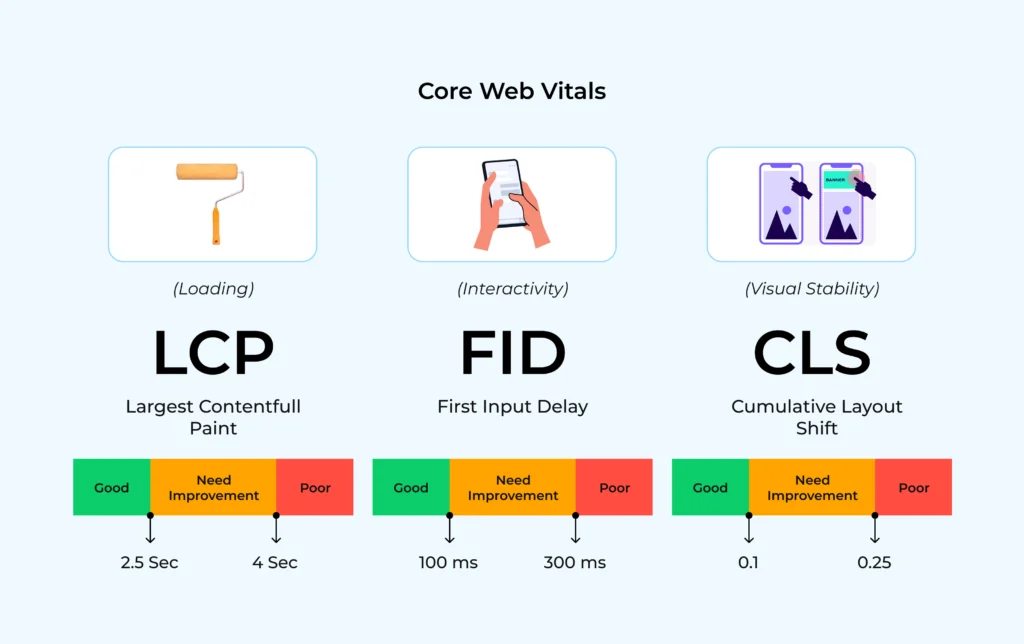
Core Web Vitals:
Google’s three user-experience metrics that measure real-world page performance: LCP (how fast the main content loads — target under 2.5s), FID/INP (how quickly the page responds to user interaction — target under 200ms), and CLS (visual stability — how much the layout shifts unexpectedly during load — target under 0.1).
CDN (Content Delivery Network):
A geographically distributed network of servers that caches and delivers your website’s static assets (images, CSS, JavaScript) from the server closest to each visitor — reducing latency and improving load times globally. Popular WordPress CDN options include Cloudflare, BunnyCDN, and KeyCDN.
Caching
The process of storing pre-generated versions of web pages so that each visitor receives a cached copy rather than triggering a fresh database query and PHP execution. WordPress caching plugins (WP Rocket, W3 Total Cache, LiteSpeed Cache) generate static HTML files that serve orders of magnitude faster than dynamic WordPress page generation.
Image Optimization:
The practice of reducing image file sizes — through compression, modern format conversion (WebP/AVIF), and responsive sizing — without perceptible quality loss. Images are typically the largest performance bottleneck on WordPress sites, often accounting for 60–80% of total page weight.
In this blog, we’ll explore the key performance metrics (Core Web Vitals) and practical optimization techniques that will help your WordPress site achieve blazing-fast speed.
The 5 Core Metrics That Define Website Speed
When optimizing WordPress performance, you need to focus on Google’s Core Web Vitals, benchmarks that measure how users actually experience your site:
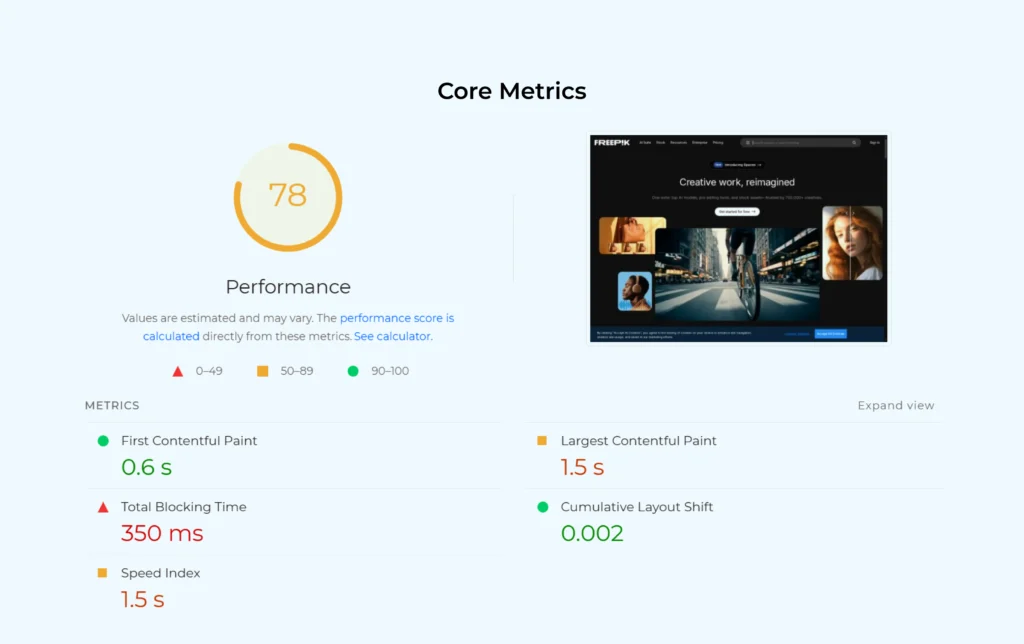
1. Speed Index (SI)
Measures: How quickly the page’s visible parts are displayed.
- A lower SI means content is loading faster.
- Target: Under 3.4 seconds.
2. First Contentful Paint (FCP)
Measures: The time when the first piece of content (text or image) appears.
- It sets the user’s perception of responsiveness.
- Target: <1.8 seconds.
3. Largest Contentful Paint (LCP)
Measures: When the main/large content element (like a hero image or headline) is fully visible.
- Critical for the “first impression” of your site.
- Target: <2.5 seconds.
4. Total Blocking Time (TBT)
Measures: How long JavaScript blocks user interaction (e.g., clicking, scrolling).
- Heavy scripts are the biggest culprit here.
- Target: Less than 200 ms.
5. Cumulative Layout Shift (CLS)
Measures: How much the layout “jumps around” while loading.
- Prevents users from clicking the wrong element due to shifting.
- Target: <0.1.
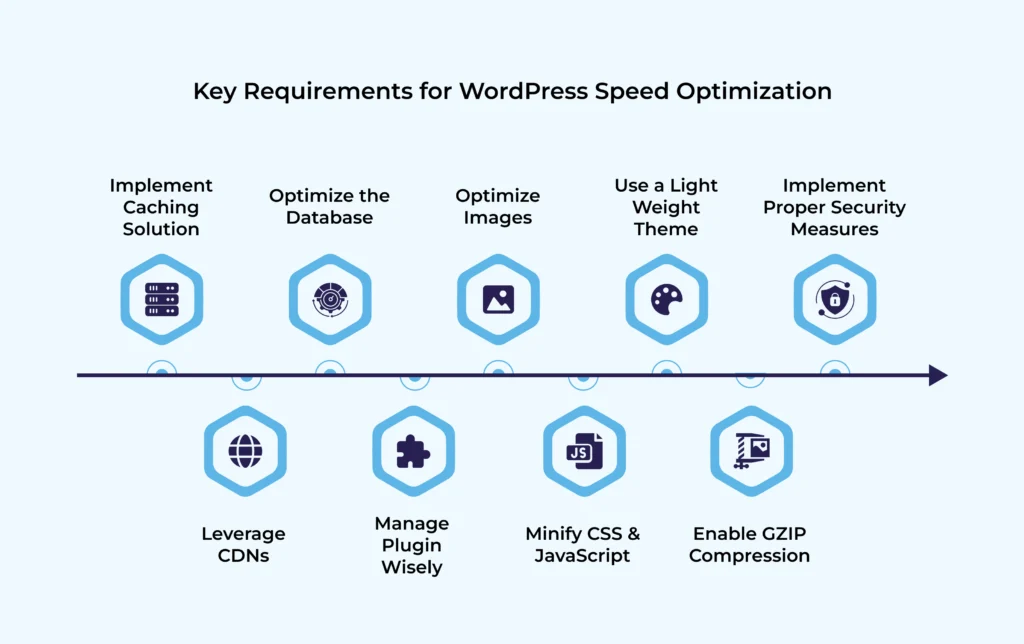
Key Requirements for WordPress Speed Optimization
1. Optimize JavaScript Loading (async, defer, exclude)
- Use async for independent scripts to load them simultaneously.
- Use defer for scripts that should wait until after HTML parsing.
- Exclude critical scripts (like jQuery) from minification or async to prevent breaking functionality.
2. Smart CSS Minification & Critical CSS Handling
- Minify CSS to reduce file size.
- Be cautious with critical CSS — don’t minify or delay core framework files that ensure above-the-fold rendering.
3. Fonts Matter: Use font-display: swap
- Prevents invisible text while fonts are loading.
- Ensures fallback fonts appear instantly and swap seamlessly once the custom font loads.
4. Image Optimization
- Use next-gen formats like WebP or AVIF.
- Implement responsive images (srcset).
- Enable lazy loading for below-the-fold visuals.
5. Caching & CDN Integration
- Use a caching plugin (e.g., WP Rocket, W3 Total Cache).
- Serve static files via a CDN to reduce latency.
- Enable object caching for database-heavy sites (WooCommerce, LMS, etc.).
Pro Tips for Maximum WordPress Performance
- Use a lightweight theme (avoid bloated multipurpose themes).
- Limit plugins — deactivate and delete unused ones.
- Optimize your database (clean up revisions, transients, spam).
- Regularly test with Google PageSpeed Insights, GTmetrix, or Lighthouse.
Conclusion
Optimizing website speed is not just about ticking technical checkboxes — it’s about delivering seamless, frustration-free experiences to your users. By aligning your WordPress site with Core Web Vitals and applying the right optimization strategies (async/defer JS, careful CSS handling, font-display: swap, caching, and image optimization), you’ll achieve faster load times, higher engagement, and improved SEO rankings.
Key Takeaway
-
- Core Web Vitals directly impact Google search rankings — poor scores reduce organic visibility.
- A 1-second delay in load time reduces conversions by up to 7% and increases bounce rate significantly.
- The three highest-impact quick wins: install a caching plugin, optimize images, and enable a CDN.
- Database query optimization and removing unused plugins often deliver greater gains than frontend changes alone.
- TTFB (Time to First Byte) is the server-side metric — poor hosting is a ceiling that no frontend optimization can overcome.
- Mobile performance now weighs more heavily than desktop in Google’s ranking algorithm (mobile-first indexing).