













What Kernshell Builds: Regression Testing Services for Enterprise

Transform software stability and release confidence with enterprise regression testing solutions engineered for reliability, scalability, and continuous delivery.

We design regression testing ecosystems aligned to development workflows, release governance, operational requirements, and enterprise scalability goals — enabling organizations to accelerate releases while minimizing production risk and operational disruption.

Our Regression Testing Capabilities Include:

  • Automated Regression Testing validating existing functionality across application updates and releases
  • Functional & Workflow Validation ensuring business-critical operations remain stable and reliable
  • Cross-Platform Regression Testing for web, mobile, SaaS, and enterprise application ecosystems
  • CI/CD Integrated Testing supporting continuous integration and rapid release cycles
  • API & Integration Regression Testing improving system interoperability and operational consistency
  • QA Reporting & Defect Analysis providing centralized visibility into release quality and testing outcomes

From regression strategy and framework implementation to optimization and continuous validation, Kernshell helps enterprises operationalize regression testing processes that improve software stability, release efficiency, and enterprise-wide delivery reliability.

End-to-End Regression Testing Services We Offer

Regression Strategy & Risk-Based Testing

Risk-based regression planning using change impact analysis, test selection, and coverage prioritisation. Testing effort is focused on areas most affected by each release, balancing execution time, coverage depth, and regression risk to maximise release confidence.

Automated Regression Suite Development

Automated regression suite development with robust test architecture, page objects, data-driven design, CI/CD integration, parallel execution, and reporting. Built in Playwright, Cypress, Selenium, or WebdriverIO to engineering standards, enabling reliable, team-owned regression coverage.

Manual Regression Testing

Risk-based manual regression testing focused on critical workflows, integrations, and high-impact changes. Scope is driven by change analysis and business risk, delivering structured execution evidence, reproducible defect reports, and meaningful input for release readiness decisions.

API & Integration Regression Testing

API regression testing validates endpoint behaviour, schemas, authentication, error handling, and contracts on every build. Integration regression coverage across ERP, CRM, and third-party systems detects breaking changes early, preventing costly cross-system failures and data integrity issues.

Database & Data Integrity Regression

Data regression testing covering schema changes, stored procedures, migrations, query validation, and referential integrity checks. Detects data corruption, calculation errors, and database compatibility issues early, preventing production incidents and customer-facing data discrepancies.

Performance Regression Testing

Automated performance regression testing in CI/CD tracks response times, throughput, and resource usage against approved baselines. Performance degradations are detected at commit level, preventing SLA breaches, user experience issues, and unnecessary infrastructure cost increases.

Visual Regression Testing

Automated visual regression testing with Chromatic, Percy, or Playwright compares releases against approved baselines, detecting unintended UI changes in pull requests. Combined with functional testing, it protects both application behaviour and visual consistency across releases.

Regression Suite Audit & Optimisation

Regression suite assessment and optimisation covering coverage gaps, flakiness, execution time, duplication, and maintainability. Improvements to parallel execution, test stability, and isolation deliver faster, more reliable feedback while preserving existing regression coverage.

Regulated Regression Testing & Compliance

Regulated regression testing with requirement traceability, risk classification, audit-ready execution records, defect evidence, and formal reporting. Documentation is produced during testing to support FDA, EU Annex 11, GAMP 5, ISO 13485, SOX, and related compliance requirements.

Continuous Regression Monitoring & Maintenance

Post-release regression assurance through production smoke tests, synthetic monitoring, and validation of key workflows. Ongoing suite maintenance includes flakiness reduction, coverage updates, obsolete test removal, and optimisation to keep regression testing effective as the product evolves.

Our Core Regression Testing Technology Stack

Frameworks, tooling, and CI infrastructure selected based on your application stack, release cadence, and regulatory requirements – not default tool preferences.

  • All
  • Languages
  • Gen AI platforms
  • Frameworks
  • Debugging & Tracing
  • Vector Databases
  • DBMS
  • Data Visualization

Languages

C#

C#

Rust

Rust

Python

Python

JavaScript

JavaScript

Java

Java

R

R

Gen AI platforms

LangChain

LangChain

Hugging Face

Hugging Face

Apache Spark

Apache Spark

Gemini

Gemini

Phi

Phi

Frameworks

LangChain

LangChain

LlamaIndex

LlamaIndex

PyTorch

PyTorch

Kedro

Kedro

TensorFlow

TensorFlow

Keras

Keras

Debugging & Tracing

Langsmith

Langsmith

Langfuse

Langfuse

Vector Databases

PostgreSQL

PostgreSQL

Chroma

Chroma

Milvus

Milvus

Qdrant

Qdrant

Pinecone

Pinecone

DBMS

PostgreSQL

PostgreSQL

MySQL

MySQL

MongoDB

MongoDB

CouchDB

CouchDB

Cassandra

Cassandra

Neo4j

Neo4j

Data Visualization

Power BI

Power BI

Tableau

Tableau

Languages

C#

C#

Rust

Rust

Python

Python

JavaScript

JavaScript

Java

Java

R

R

Gen AI platforms

LangChain

LangChain

Hugging Face

Hugging Face

Apache Spark

Apache Spark

Gemini

Gemini

Phi

Phi

Frameworks

LangChain

LangChain

LlamaIndex

LlamaIndex

PyTorch

PyTorch

Kedro

Kedro

TensorFlow

TensorFlow

Keras

Keras

Debugging & Tracing

Langsmith

Langsmith

Langfuse

Langfuse

Vector Databases

PostgreSQL

PostgreSQL

Chroma

Chroma

Milvus

Milvus

Qdrant

Qdrant

Pinecone

Pinecone

DBMS

PostgreSQL

PostgreSQL

MySQL

MySQL

MongoDB

MongoDB

CouchDB

CouchDB

Cassandra

Cassandra

Neo4j

Neo4j

Data Visualization

Power BI

Power BI

Tableau

Tableau

Ready to Build Regression Coverage That Prevents Production Defects?

Image
Image

Where Regression Testing Delivers Enterprise-Grade Impact Across Functions

Regression Testing Solutions We Can Design, Build & Integrate

Proven regression testing solution patterns – purpose-engineered for enterprise release cadence, production stability requirements, and regulated industry compliance.

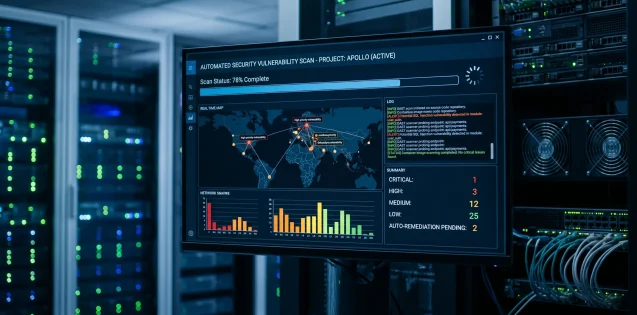
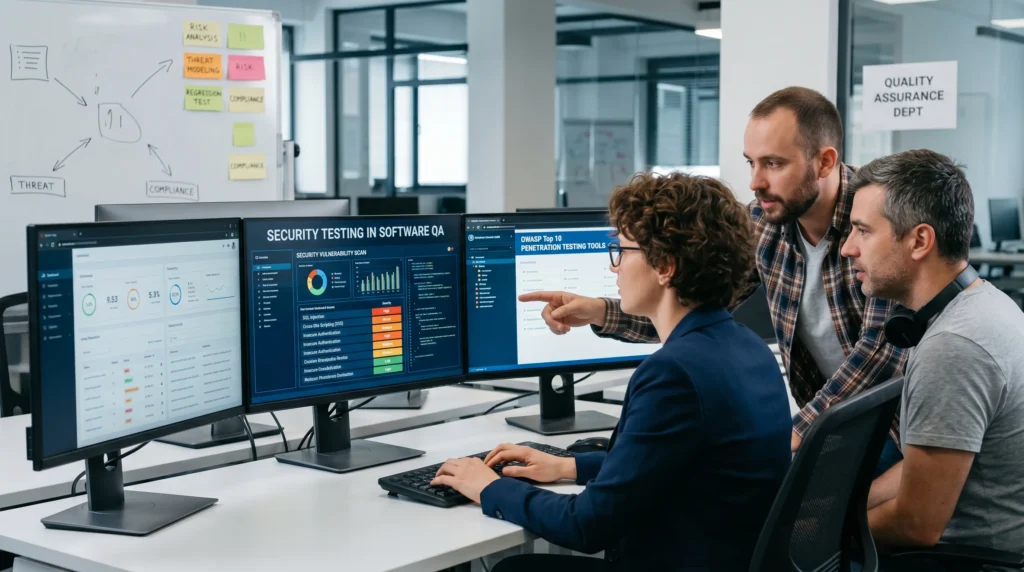
Security_Testing_in_enterprise_software-_202606162356 (1)
Enterprise Regression Programme

End-to-end regression testing combining risk-based planning, automated and manual coverage, CI/CD integration, defect management, and release reporting. A scalable, risk-driven approach that focuses testing where regressions are most likely to impact production systems and users.

Automated Regression Suite Build

Automated regression suite with page objects, data-driven testing, parallel execution, CI/CD integration, visual checks, and reporting. Covers critical user journeys, APIs, and integrations, delivered as maintainable, team-owned test assets aligned with engineering standards.

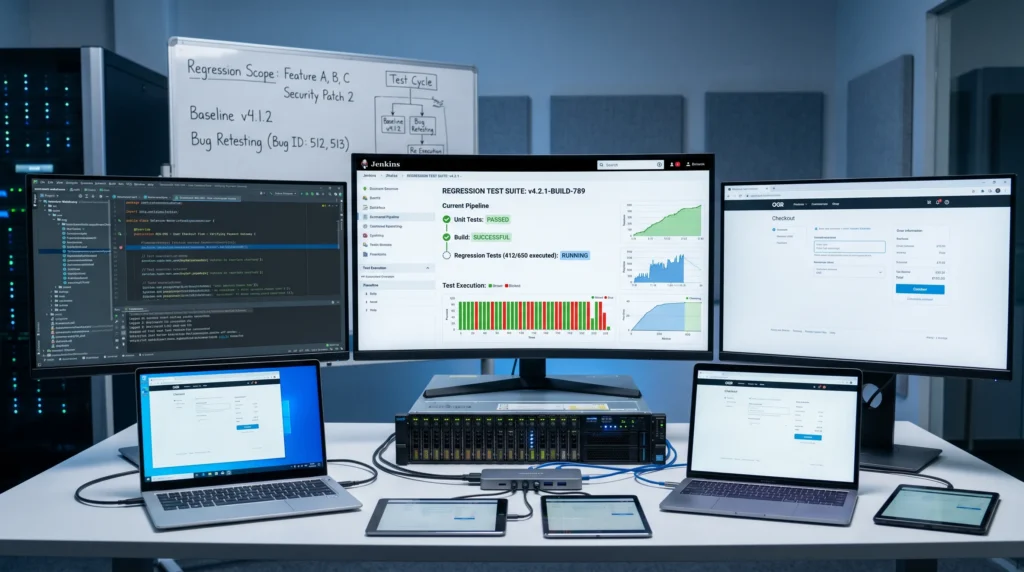
CI/CD Regression Pipeline

Regression testing integrated across CI/CD stages: unit tests at commit, API and integration tests at PR, end-to-end tests in staging, and full regression before release. Quality gates stop regressions early, giving developers fast feedback before defects become costly to resolve.

Regression Suite Rescue & Optimisation

Regression suite audit and optimisation covering flakiness analysis, execution speed, coverage gaps, and architecture review. Restores trust in unreliable test suites by improving stability, performance, and defect detection without requiring a full rebuild.

API Contract Regression Platform

Consumer-driven contract testing with Pact verifies versioned API contracts in CI/CD. Breaking changes are detected before deployment, maintaining integration stability and regression confidence across microservices with independent release cycles.

Performance Regression Programme

Performance regression testing with baselines, thresholds, CI/CD enforcement, capacity planning inputs, and trend analytics. Detects performance degradation at commit level, protecting user experience, SLA compliance, and infrastructure efficiency before production release.

Regulated Release Regression Programme

Regulated regression testing with traceability, execution evidence, deviation management, defect classification, and audit-ready reporting. Documentation is created during testing to satisfy FDA, EMA, ISO, SOX, and other compliance requirements without retrospective rework.

Visual Regression Programme

Visual regression testing with baseline management, CI/CD integration, PR-level diff reviews, and deployment gates. Protects customer-facing interfaces, design systems, and branding by detecting unintended UI changes while complementing functional regression coverage.

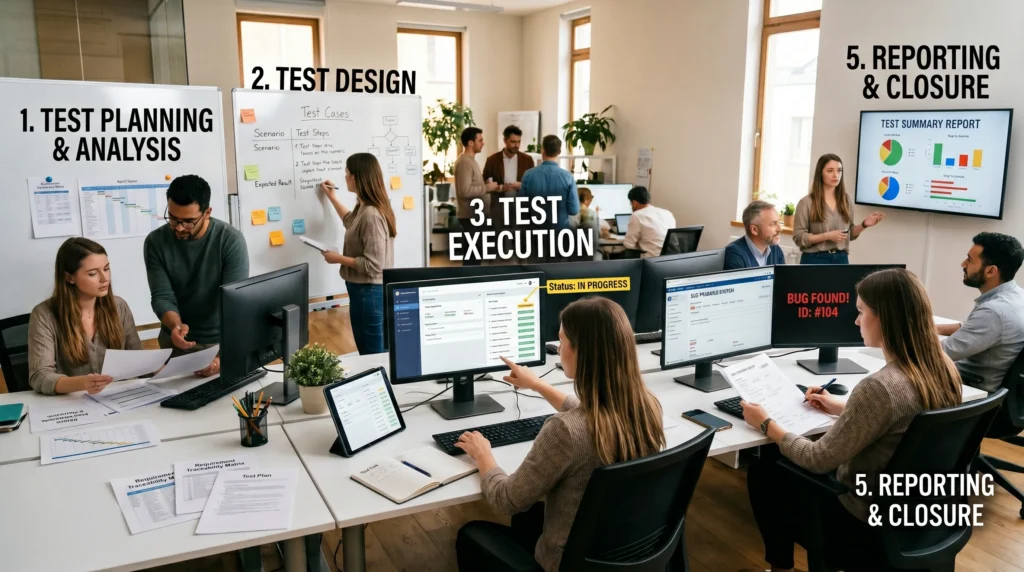
Our Process For Regression Testing Delivery

A six-stage delivery process – from regression strategy and risk assessment through governed, CI-integrated, and team-owned production regression coverage.
Regression Strategy & Risk Assessment

Application architecture analysis · change impact assessment methodology · regression risk classification · test selection strategy · automated vs manual coverage allocation · CI/CD integration approach · compliance documentation requirements → regression strategy and coverage roadmap approved before test design begins.

Test Design & Suite Architecture

Regression test case design · risk-based scope prioritisation · automated suite architecture · page object model design · data strategy · manual regression scope definition · traceability matrix (regulated programmes) → architecture reviewed by engineering, QA, and release stakeholders before build commences.

Regression Suite Build & CI Integration

Automated suite implementation · manual regression case authoring · API contract test development · CI pipeline integration · quality gate configuration · parallel execution setup · reporting integration → regression suites executing in CI with quality gate enforcement from first delivery.

Baseline Establishment & Validation

Visual regression baseline capture · performance baseline measurement · full suite execution against stable baseline build · flakiness identification and remediation · coverage gap validation · suite execution time measurement → stable, reliable regression baseline confirmed before release programme begins.

Release Regression Execution & Sign-Off

Risk-scoped regression execution per release · defect triage and severity classification · re-test verification on fixes · regression impact assessment of late fixes · release readiness report · formal sign-off (regulated programmes) → release decision made on structured regression evidence.

Suite Maintenance, Governance & Optimisation

Flakiness monitoring and remediation · coverage extension as features ship · obsolete test removal · execution time optimisation · CI pipeline health monitoring · quarterly regression programme health review → regression coverage quality sustained as application, team, and release cadence evolve.

Why Enterprises Choose Us As Their Regression Testing Partner

The difference between a regression testing provider and a regression testing partner is accountability – for production regression escape rate, release confidence, and suite health, not test execution volume.

  • Risk-based regression testing focused on change impact, business criticality, and areas of highest failure risk.
  • Balanced automation and manual testing strategy to maximise coverage, efficiency, and defect detection.
  • Engineering-owned regression suites integrated into CI/CD pipelines and designed for long-term maintainability.
  • Strong focus on test reliability, with proactive management and elimination of flaky test behaviour.
  • Experience supporting regulated industries with compliance-ready regression evidence and validation documentation.
  • Outcome-driven programmes measured by reduced defect leakage, faster releases, and improved suite reliability.
Don't Worry!

Our expert will solve your queries in one call.

Client Triumphs: Success Stories

Discover how our team of domain specialists have addressed industry-specific challenges and mission-critical needs. Turning your Vision into Victory, One Success Story at a time!

FAQs on Regression Testing Service

Have a question? We’re here to help.

What is regression testing and what does Kernshell deliver?

Regression testing validates that every software change – new features, bug fixes, configuration updates, and infrastructure changes – does not introduce defects in functionality that previously worked. Kernshell delivers end-to-end: regression strategy, risk-based test selection, automated suite build, manual regression coverage, CI/CD integration, performance and visual regression, suite maintenance, and release reporting – with accountability for production regression escape rate, release confidence, and ongoing suite health.

What is risk-based regression testing and why does Kernshell use it?

Risk-based regression testing directs coverage at the application areas, integration paths, and business workflows where each change introduces the highest probability and consequence of regression -` rather than executing a fixed test suite uniformly on every release. Change impact analysis identifies which application components a change touches directly and transitively. Risk classification prioritises the regression scenarios where a defect would generate the most severe operational, commercial, or regulatory consequence. The result: deeper coverage of the highest-risk scenarios in every release, faster suite execution by eliminating coverage with no relevance to the change under validation, and regression detection concentrated where production escapes are most expensive.

What is the difference between regression testing and retesting?

Retesting validates that a specific defect identified in previous testing has been correctly fixed – the test case that detected the defect is re-executed against the fix to confirm resolution. Regression testing validates that the fix, and every other change in the release, has not introduced new defects in functionality that was previously working. Both are required in a complete test programme: retesting confirms fixes work; regression testing confirms fixes do not break anything else. Kernshell manages both disciplines within the same test programme – defect re-test tracked through the defect management lifecycle, regression scope updated to include coverage of the application areas modified by the fix.

How does Kernshell integrate regression testing into our CI/CD pipeline?

Regression suites are integrated into your existing CI/CD toolchain – GitHub Actions, GitLab CI, Azure DevOps, Jenkins, or CircleCI – with execution staged at the pipeline points appropriate to each test type. Unit regression on every commit. API and integration regression on every pull request. End-to-end functional regression on deployment to staging. Performance and visual regression on every significant build. Quality gates blocking pipeline advancement on regression failures – build promotion requiring passing regression status, not just test execution completion. Test results published with failure context, reproduction information, and trend history — not binary pass/fail status that requires manual investigation to diagnose.

How does Kernshell handle regression suite maintenance as the application evolves?

Regression suite maintenance is a defined ongoing service — not an afterthought addressed when test failures accumulate faster than they are resolved. Kernshell’s maintenance programme: new feature coverage added in the same sprint features ship, not in a separate maintenance backlog that falls behind the development cadence; obsolete tests removed as application areas change to prevent false-failure noise; flakiness root cause identified and remediated rather than suppressed with retry logic; execution time profiled and optimised as suite size grows; and coverage gaps identified through production defect escape analysis and addressed before the next release cycle. Regression suites maintained to the same engineering standards as production code — not tolerated as technical debt that erodes suite reliability over time.

How long does a regression testing engagement take with Kernshell?

A focused regression programme for a defined application scope – strategy, automated suite build, CI integration, and manual regression coverage – reaches operational capability in 8–14 weeks. Enterprise regression programmes covering multiple application modules, API contract regression, performance regression, visual regression, and regulated compliance evidence are scoped with milestones following the strategy assessment – typically 14–24 weeks depending on application complexity, existing automation maturity, and regulatory documentation requirements. Ongoing suite maintenance and governance are structured as retained engagements sustaining coverage quality across the release programme.

Does Kernshell provide regression testing for regulated industries?

Yes – pharmaceutical, medical device, financial services, healthcare, and regulated technology environments are active verticals. Regression programmes in regulated contexts are designed from the first strategy session to produce the evidentiary documentation required for regulatory inspection: regression test case traceability to requirements and risk classification, executed evidence records with tester identity and timestamp, defect documentation with severity assessment and resolution evidence, deviation management records, and formal regression test summary reports. Documentation produced during execution – structured for FDA 21 CFR Part 11, EU Annex 11, GAMP 5, ISO 13485, and SOX IT control compliance from the first test case authoring session, not formatted for regulatory submission after the programme is complete.

Still Have Questions?

Can’t find the answer you’re looking for? Please get in touch with our team.

We Empower 170+ Global Businesses

Mars Logo
Johnson Logo
Kimberly Clark Logo
Coca Cola Logo
loreal logo
Jabil Logo
Hitachi Energy Logo
SkyWest Logo

Let’s innovate together!

Engage with a premier team renowned for transformative solutions and trusted by multiple Fortune 100 companies. Our domain knowledge and strategic partnerships have propelled global businesses.
Let’s collaborate, innovate and make technology work for you!

Our Locations

101 E Park Blvd, Plano,
TX 75074, USA

1304 Westport, Sindhu Bhavan Marg,
Thaltej, Ahmedabad, Gujarat 380059, INDIA

Phone Number

+1 817 380 5522


    Loading...

    Area Of Interest *

    Explore Our Service Offerings

    Hire A Team / Developer

    Become A Technology Partner

    Job Seeker

    Other