













- Services
-
-
- Service Platform
Artificial Intelligent
AI, ML & Data Engineering
End-to-end digital services spanning AI, data, development, cloud, and design.
ETQ Reliance
Enterprise Platforms
Migrate, manage, deploy, and optimize M365, Azure, Power Platform, and Microsoft Teams
Software Development
Mobile & Web
UI/UX Design
Software Testing & QA
Digital Engineering
End-to-end digital services spanning AI, data, development, cloud, and design.
Cloud Infrastructure
DevOps & Automation
Cloud
Migrate, manage, deploy, and optimize M365, Azure, Power Platform, and Microsoft Teams
Security Engineering
Risk & Compliance
Cybersecurity
Security engineering, compliance, and risk management
-
-
- Industries & Customers
- Solutions
-
-
Solutions
End-to-end IT solutions to transform, manage, and scale your digital ecosystem.
-
-
- Insights
-
- Company
-
Enterprise Design System Services Built for Consistency. Governed for Scale.
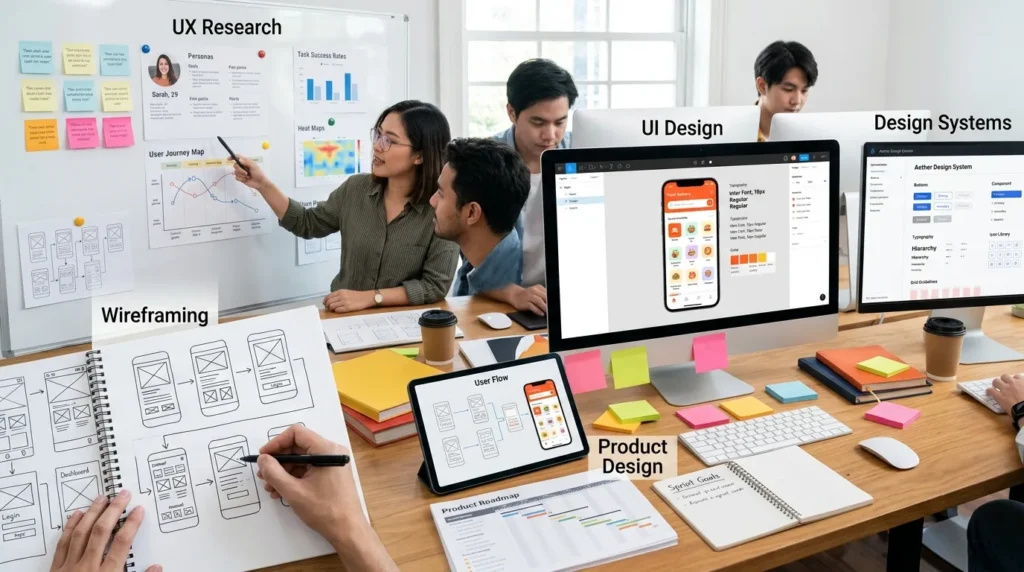
Kernshell designs, builds, and governs enterprise design systems – component libraries, design tokens, accessibility standards, engineering integration, and DesignOps processes. Creating consistency, improving collaboration, accelerating delivery, and maintaining quality across products, teams, and digital experiences.
What Kernshell Builds: Design System Services for Enterprise
Transform enterprise digital product delivery with scalable Design System solutions engineered for consistency, usability, collaboration, and operational efficiency.
Our Design System Capabilities Include:
- Enterprise Design Systems for scalable and consistent digital product experiences
- UI Component Libraries improving development efficiency and cross-platform consistency
- Design Governance & Standards ensuring brand alignment and enterprise-wide usability
- Accessibility & Responsive Frameworks aligned to enterprise compliance and usability standards
- Figma-Based Design Operations streamlining collaboration between design and engineering teams
- Front-End Integration Support connecting design systems with enterprise application ecosystems
From strategy and architecture to implementation and governance, Kernshell helps enterprises operationalize Design Systems that improve scalability, product consistency, development efficiency, and enterprise-wide digital experience quality.
End-to-End Design System Services We Offer
Design System Strategy & Discovery
Design system discovery and strategy covering UI audits, component inventories, inconsistency analysis, engineering assessment, workflow evaluation, and governance planning – defining system scope, adoption strategy, and success metrics to ensure long-term scalability, maintainability, and team-wide productivity gains.
Design Token Architecture
Design token architecture covering primitive, semantic, and component tokens for multi-brand, multi-theme, and multi-platform ecosystems. Establishing scalable token governance, naming conventions, and automated distribution pipelines from design tools to web, iOS, and Android applications.
Component Library Design
Component library development using atomic design principles, covering form controls, navigation, data visualisation, layouts, and domain-specific components. Built in Figma with variants, auto-layout, accessibility guidance, usage documentation, and clear engineering mappings for consistent implementation.
Component Library Engineering
Design system component library development for React, Angular, Vue, Svelte, Web Components, SwiftUI, and Jetpack Compose – featuring TypeScript, accessibility compliance, responsive behaviour, testing, CI/CD integration, and governance aligned with your engineering standards for seamless adoption and long-term maintainability.
Storybook Development & Documentation
Storybook implementation with component documentation, variant and state coverage, interactive controls, accessibility testing, visual regression monitoring, and design token references – creating a governed, living source of truth for designers and engineers across all product teams.
Accessibility Framework Implementation
Accessibility-first design systems with WCAG 2.1/2.2 compliance built into every component, including keyboard navigation, ARIA support, screen reader compatibility, focus management, and automated axe-core CI testing. Storybook documentation ensures consistent, compliant implementation across teams.
Multi-Brand & Multi-Theme Architecture
Multi-brand design system architecture supporting white-label products, customer theming, and dark/light modes through token-based theming and shared components. New brands and themes are delivered through token configuration rather than component duplication, enabling scalable governance, consistency, and efficient portfolio-wide reuse.
Design-to-Engineering Workflow Integration
Design token pipelines connecting Figma and code through automated token management, CI validation, and documentation tooling. Structured handoff workflows, design reviews, visual regression testing, and release governance ensure design intent is preserved consistently from specification through production deployment.
Design System Governance & DesignOps
Design system governance covering contribution workflows, design and engineering reviews, accessibility validation, semantic versioning, deprecation management, migration guidance, and adoption analytics – ensuring quality, consistency, controlled evolution, and visibility into system usage across products.
Design System Audit & Consolidation
Design system audits covering component inventories, duplication analysis, inconsistency mapping, accessibility debt, and legacy pattern assessment. Delivered with a prioritised consolidation and migration roadmap enabling incremental adoption across products without disrupting ongoing development.
Our Core Design System Technology Stack
Tools, frameworks, and pipeline infrastructure selected based on your engineering environment, team structure, and multi-platform requirements – not tool trends.
- All
- Languages
- Gen AI platforms
- Frameworks
- Debugging & Tracing
- Vector Databases
- DBMS
- Data Visualization
Languages
C#
Rust
Python
JavaScript
Java
R
Gen AI platforms
LangChain
Hugging Face
Apache Spark
Gemini
Phi
Frameworks
LangChain
LlamaIndex
PyTorch
Kedro
TensorFlow
Keras
Debugging & Tracing
Langsmith
Langfuse
Vector Databases
PostgreSQL
Chroma
Milvus
Qdrant
Pinecone
DBMS
PostgreSQL
MySQL
MongoDB
CouchDB
Cassandra
Neo4j
Data Visualization
Power BI
Tableau

Languages
C#
Rust
Python
JavaScript
Java
R
Gen AI platforms
LangChain
Hugging Face
Apache Spark
Gemini
Phi
Frameworks
LangChain
LlamaIndex
PyTorch
Kedro
TensorFlow
Keras
Debugging & Tracing
Langsmith
Langfuse
Vector Databases
PostgreSQL
Chroma
Milvus
Qdrant
Pinecone
DBMS
PostgreSQL
MySQL
MongoDB
CouchDB
Cassandra
Neo4j
Data Visualization
Power BI
Tableau
Ready to Build a Design System That Scales with Your Organisation?
Where Design Systems Deliver Enterprise-Grade Impact Across Functions
Product & Engineering
Design Teams
Brand & Marketing
Technology & Architecture
Legal & Compliance
Finance & Procurement
Customer Experience
Executive Leadership
Design System Solutions We Can Design, Build & Integrate
Proven design system solution patterns – purpose-engineered for enterprise product scale, multi-team adoption, and long-term system governance.
Enterprise Design System - Full Build
End-to-end design system delivery including tokens, component libraries, Figma assets, engineering implementation, Storybook documentation, accessibility standards, CI integration, governance, and adoption tracking - creating a scalable, governed source of truth across teams and products.
Design Token Pipeline
Design token architecture and automation pipelines connecting Figma to web, mobile, and cross-platform applications through versioned token releases, CI validation, and automated distribution - enabling consistent brand governance, theming, and scalable design updates across every product surface.
Component Library Migration
Design system migration services for legacy component libraries, including Material UI, Bootstrap, Ant Design, and bespoke implementations. Delivered through phased, component-level adoption, governed deprecation, migration guidance, versioning, and usage tracking - enabling modernisation without disrupting ongoing product development.
Multi-Brand Design System
Multi-brand design system architecture supporting white-label products and customer-configurable themes through token-based theming and shared components. New brands are deployed through token configuration rather than component rebuilds, enabling scalable governance, consistency, and efficient portfolio-wide maintenance.
Accessibility-First Design System
Accessibility-first design systems built to WCAG 2.1/2.2 standards, with keyboard navigation, ARIA support, colour contrast, screen reader compatibility, and automated axe-core CI testing. Storybook documentation and governance ensure accessibility compliance is embedded across all products from the outset.
Design System Audit & Consolidation Programme
Design system audits covering component inventories, duplication analysis, consistency scoring, accessibility debt, and shadow component detection. Delivered with a phased consolidation and migration roadmap enabling incremental adoption of governed components without disrupting ongoing product delivery.
DesignOps & Governance Programme
DesignOps frameworks covering contribution workflows, RFC processes, review governance, versioning, deprecation management, release controls, and adoption analytics—enabling scalable design system growth, reducing rework, maintaining quality, and ensuring long-term adoption across product teams.
White-Label Product Design System
Design system architecture for white-label SaaS platforms with token-based theming, customer branding controls, theme APIs, and onboarding workflows. Deliver customised brand experiences while maintaining shared components, governance, consistency, and low long-term maintenance overhead.
Our Process For Design System Delivery
A six-stage delivery process – from UI audit and strategy through governed, adopted, and engineering-integrated production system.
Discovery & Design System Strategy
UI audit and component inventory · design inconsistency mapping · engineering framework assessment · team workflow analysis · scope definition · phasing strategy · success metric definition → design system strategy and delivery roadmap approved before component design begins.
Token Architecture & Foundation Design
Token taxonomy design · primitive, semantic, and component token hierarchy · naming convention · multi-brand and multi-theme strategy · Figma Variables configuration · token pipeline selection → token architecture approved by design, engineering, and brand stakeholders before component design commences.
Component Library Design & Engineering
Figma component library build · component engineering in target framework · accessibility implementation · Storybook stories and documentation · automated testing · CI integration → components released incrementally with design and engineering review at each component release.
Documentation, Testing & Accessibility Validation
Storybook documentation completion · axe-core CI integration · Chromatic visual regression baseline · WCAG 2.1 AA / 2.2 manual testing · usage guidance and do/don’t documentation · engineering API documentation → accessibility and documentation standards met before system launch.
Governance Framework & Adoption Programme
Contribution process · versioning and release governance · deprecation policy · adoption analytics implementation · team enablement sessions · migration guidance documentation → governance framework and adoption programme active before system is opened to product team contribution.
Ongoing Governance, Evolution & Optimisation
Adoption analytics monitoring · contribution review cadence · component gap identification · token and component versioning · browser and framework compatibility maintenance · quarterly system health review → design system value compounding as teams scale, products expand, and the component library evolves with your product requirements.
Why Enterprises Choose Us As Their Design System Partner
The difference between a design system vendor and a design system partner is accountability – for engineering adoption, product consistency, and long-term system health, not component delivery.
- Strategic design system delivery covering architecture, governance, design tokens, and adoption frameworks.
- Deep engineering integration with component libraries built to align with existing codebases and development standards.
- Accessibility-first systems with WCAG compliance and automated testing embedded at the component level.
- Multi-brand and multi-platform support through scalable theming and shared design foundations.
- Robust governance including contribution models, versioning, deprecation management, and adoption tracking.
- Success measured by adoption, development efficiency, consistency, and reduced design-to-development effort.
Our expert will solve your queries in one call.
Client Triumphs: Success Stories
Discover how our team of domain specialists have addressed industry-specific challenges and mission-critical needs. Turning your Vision into Victory, One Success Story at a time!
FAQs on Design System Services
Have a question? We’re here to help.
A design system is a governed library of reusable UI components, design tokens, usage documentation, and engineering implementations – shared across product teams to ensure visual consistency, accelerate development, and maintain accessibility compliance at scale. Kernshell delivers end-to-end: token architecture, component library design, engineering implementation, Storybook documentation, accessibility framework, CI integration, governance programme, and adoption enablement – with accountability for engineering velocity, product consistency, and long-term system health.
A UI kit is a collection of visual design assets in a design tool. A component library is a codebase of reusable UI components. A design system is the governed, documented combination of both – plus design tokens defining the visual language, usage guidelines specifying when and how to use each component, accessibility specifications, contribution governance, and the operational processes that keep the system current and adopted. Kernshell builds design systems, not UI kits – the difference is the governance, documentation, and engineering integration that determine whether teams adopt the system or bypass it.


Design tokens are named variables storing the primitive values of a visual system – colour, typography scale, spacing, border radius, elevation, and motion duration – applied to components through a semantic token layer that carries contextual meaning (colour-background-primary, spacing-component-medium) rather than raw values (hex codes, pixel values). Token architecture is built first because it is the foundation that every component decision depends on: token structure determines multi-brand capability, theme support, and the effort required to propagate visual system changes across every product surface. Token architecture mistakes require component library rework to fix – getting it right first eliminates the most expensive form of design system technical debt.
Adoption is treated as a delivery requirement, not a post-launch aspiration. Kernshell designs the contribution process, versioning strategy, migration guidance, and team enablement programme before the system launches – ensuring product teams have a clear path to adoption from day one. Adoption analytics (Omlet, custom component usage tracking) provide visibility into where the system is being used, where shadow components are accumulating outside it, and which teams require additional enablement. System governance maintains quality as teams contribute – adoption without governance produces a component library that diverges faster than it converges.
Accessibility is a first-order component requirement – not an audit conducted after the component library is built. Every component is designed with WCAG 2.1 AA / 2.2 compliance as a build constraint: colour contrast validation, keyboard navigation implementation, ARIA roles and labelling, focus management, screen reader testing (NVDA, JAWS, VoiceOver), touch target sizing, and motion reduction support. axe-core is integrated into the CI pipeline – components failing automated accessibility checks are blocked from merging. Storybook Accessibility addon surfaces a11y issues during component development. The result is a component library where accessibility is a property of the system, not a variable dependent on individual developer implementation decisions.
A focused design system – token architecture, core component library (20–40 components), Storybook documentation, and governance framework – reaches production in 12–20 weeks. Enterprise design systems with multi-brand token architecture, multi-platform component delivery (web, iOS, Android), complex component scope, and full DesignOps governance programme are scoped with milestones following the discovery audit – typically 20–32 weeks depending on component breadth, engineering framework complexity, and the number of product teams in the adoption scope.
Yes – ongoing design system managed services covering component gap identification and delivery, token and component versioning, browser and framework compatibility maintenance, contribution review support, adoption analytics monitoring, governance evolution as organisational structure changes, and quarterly system health review. Design systems that are not actively maintained degrade – browsers deprecate APIs, framework versions introduce breaking changes, accessibility standards update, and product requirements create component gaps that shadow implementations fill if the system does not evolve. Kernshell provides the ongoing engineering and design relationship that keeps the system current, adopted, and compounding team productivity rather than becoming the legacy UI framework the next generation of product teams routes around.
Still Have Questions?
Can’t find the answer you’re looking for? Please get in touch with our team.
Let’s innovate together!
Engage with a premier team renowned for transformative solutions and trusted by multiple Fortune 100 companies. Our domain knowledge and strategic partnerships have propelled global businesses.
Let’s collaborate, innovate and make technology work for you!
Our Locations
101 E Park Blvd, Plano, TX 75074, USA
1304 Westport, Sindhu Bhavan Marg, Thaltej, Ahmedabad, Gujarat 380059, INDIA
Email Address