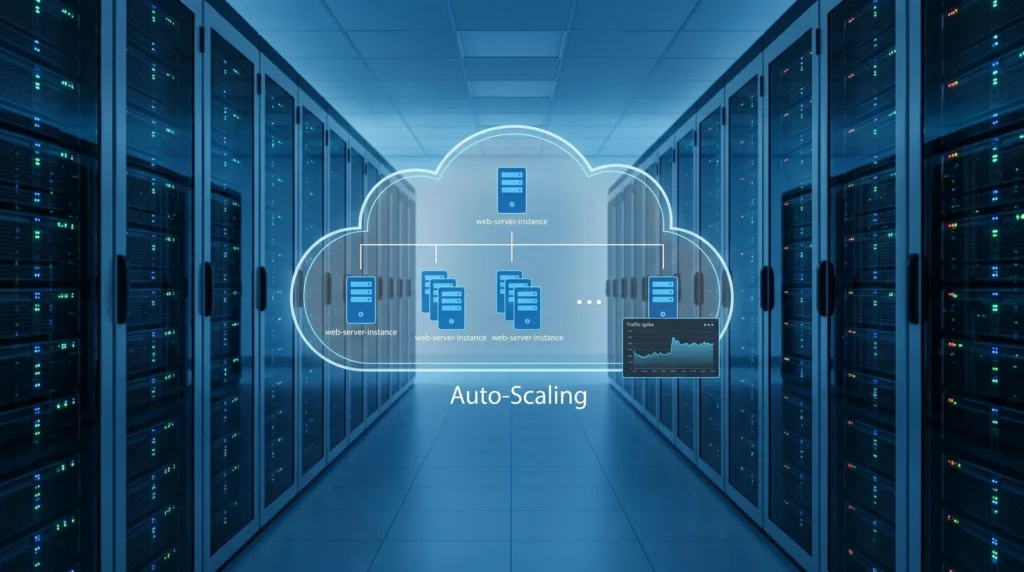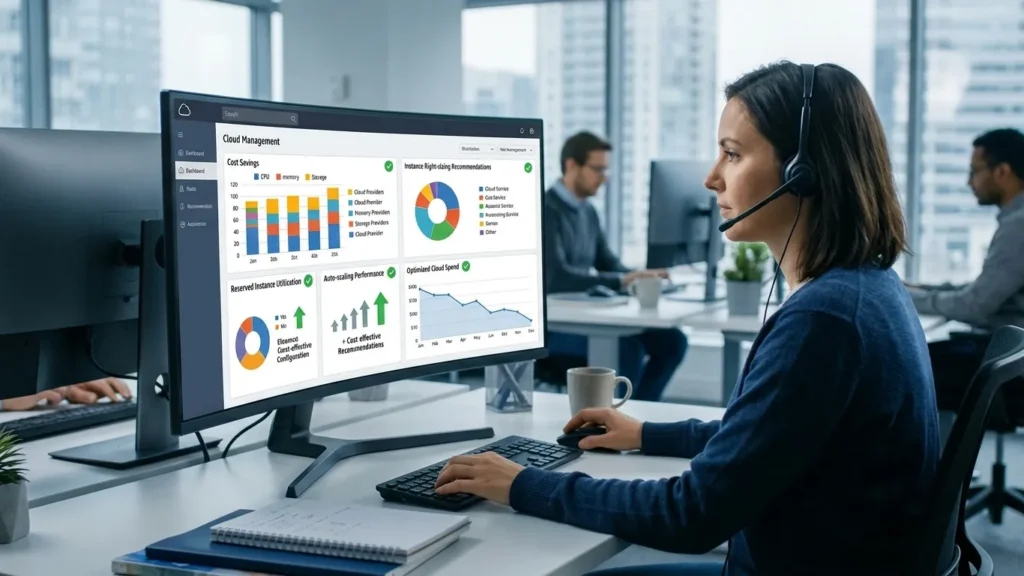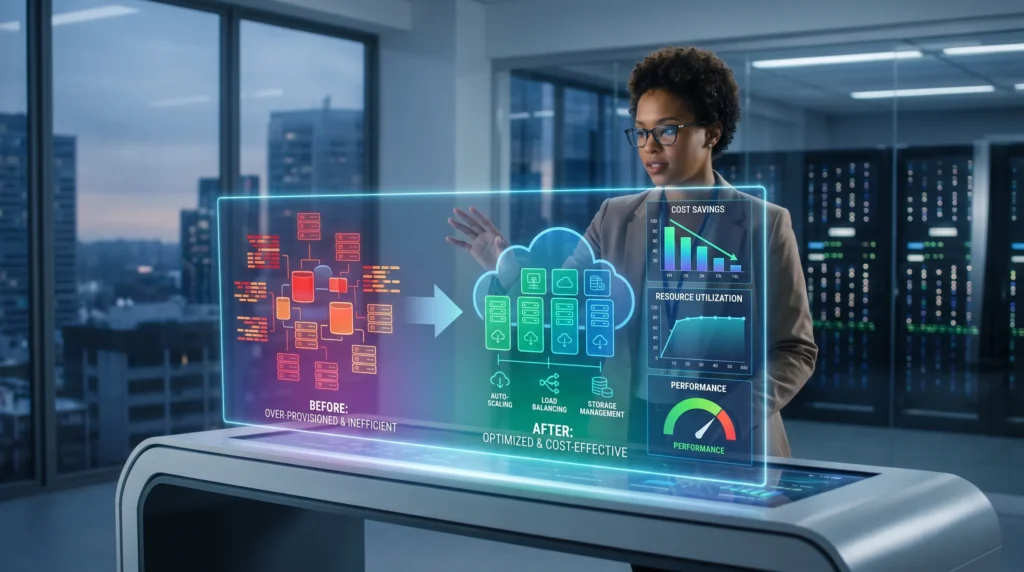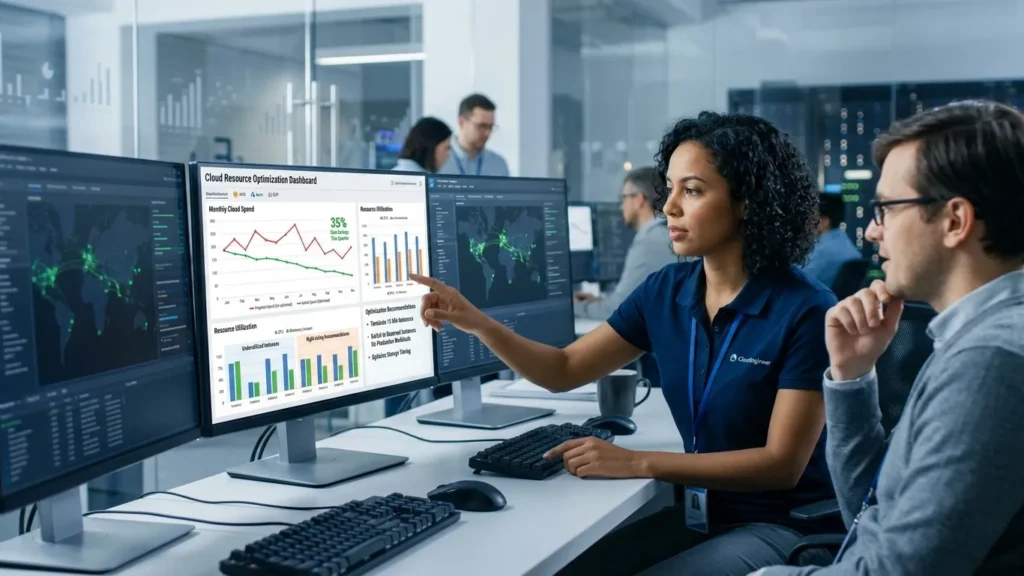














What Kernshell Builds: Cloud Optimisation Services for Enterprise

Transform cloud operations with enterprise cloud optimisation services engineered for performance, cost efficiency, scalability, and operational resilience.

Our Cloud Optimisation Capabilities Include: 

  • Cloud Cost Optimisation reducing infrastructure waste and improving resource efficiency  
  • Workload & Performance Tuning enhancing application speed, scalability, and operational reliability  
  • Infrastructure Right-Sizing optimizing compute, storage, and network utilization across cloud environments  
  • Kubernetes & Container Optimisation improving orchestration efficiency and platform scalability  
  • Cloud Governance & FinOps enabling controlled, transparent, and compliant cloud operations  
  • Automation & Monitoring Solutions improving visibility, operational efficiency, and infrastructure management  

From cloud assessment and architecture review to continuous optimisation and governance, Kernshell helps enterprises operationalize cloud environments that improve performance, reduce operational costs, and strengthen long-term digital scalability. 

End-to-End Cloud Optimisation Services We Offer

Cloud Cost Assessment & Waste Identification

Full spend analysis across idle instances, oversized compute, orphaned resources, and data transfer, waste quantified by service, account, and team, prioritised by savings potential.

FinOps Implementation & Cost Governance

Tagging strategy, account rationalisation, showback/chargeback models, budget policies, and anomaly alerting, cloud spend accountability embedded in engineering workflows, not managed reactively.

Compute Rightsizing & Purchasing Optimisation

Instance rightsizing across EC2, Azure VMs, and GCP Compute validated against actual utilisation. RI and Savings Plan coverage optimised across terms and flexibility scope, sustained through automated monitoring.

Storage & Data Transfer Optimisation

Lifecycle policies, intelligent tiering, and archival rules across S3, Blob, and GCS. EBS/disk rightsizing, snapshot management, and cross-region egress cost reduction.

Kubernetes & Container Cost Optimisation

Pod rightsizing, VPA/HPA tuning, KEDA scaling, and cluster consolidation, reducing Kubernetes infrastructure cost without availability or performance trade-off.

Architectural Cloud Cost Optimisation

Serverless migration, managed service rationalisation, database engine optimisation, and CDN architecture, structural cost reduction that rightsizing alone cannot achieve.

Reserved Instance & Commitment Portfolio Management

RI, Savings Plan, and Azure RVI portfolio management, coverage analysis, expiry tracking, and quarterly purchase recommendations aligned to financial planning cycles.

Cloud Performance Engineering

Query optimisation, caching, autoscaling tuning, and cold start reduction, performance improvements that reduce compute consumption and improve service quality simultaneously.

Multi-Cloud & Hybrid Cost Governance

Unified cost visibility across AWS, Azure, and GCP, workload placement optimisation, cross-provider data transfer reduction, and hybrid cost attribution in a single framework.

FinOps Tooling & Cost Intelligence Platform

AWS Cost Explorer, Azure Cost Management, GCP Billing, and third-party tools (CloudHealth, Cloudability, Spot.io, Infracost), configured for your account structure and integrated into engineering workflows.

Our Core Cloud Infrastructure Technology Stack

Cloud platforms, DevSecOps tooling, and observability infrastructure selected on your architecture requirements, compliance obligations, and operational maturity.

  • All
  • Languages
  • Gen AI platforms
  • Frameworks
  • Debugging & Tracing
  • Vector Databases
  • DBMS
  • Data Visualization

Languages

C#

C#

Rust

Rust

Python

Python

JavaScript

JavaScript

Java

Java

R

R

Gen AI platforms

LangChain

LangChain

Hugging Face

Hugging Face

Apache Spark

Apache Spark

Gemini

Gemini

Phi

Phi

Frameworks

LangChain

LangChain

LlamaIndex

LlamaIndex

PyTorch

PyTorch

Kedro

Kedro

TensorFlow

TensorFlow

Keras

Keras

Debugging & Tracing

Langsmith

Langsmith

Langfuse

Langfuse

Vector Databases

PostgreSQL

PostgreSQL

Chroma

Chroma

Milvus

Milvus

Qdrant

Qdrant

Pinecone

Pinecone

DBMS

PostgreSQL

PostgreSQL

MySQL

MySQL

MongoDB

MongoDB

CouchDB

CouchDB

Cassandra

Cassandra

Neo4j

Neo4j

Data Visualization

Power BI

Power BI

Tableau

Tableau

Languages

C#

C#

Rust

Rust

Python

Python

JavaScript

JavaScript

Java

Java

R

R

Gen AI platforms

LangChain

LangChain

Hugging Face

Hugging Face

Apache Spark

Apache Spark

Gemini

Gemini

Phi

Phi

Frameworks

LangChain

LangChain

LlamaIndex

LlamaIndex

PyTorch

PyTorch

Kedro

Kedro

TensorFlow

TensorFlow

Keras

Keras

Debugging & Tracing

Langsmith

Langsmith

Langfuse

Langfuse

Vector Databases

PostgreSQL

PostgreSQL

Chroma

Chroma

Milvus

Milvus

Qdrant

Qdrant

Pinecone

Pinecone

DBMS

PostgreSQL

PostgreSQL

MySQL

MySQL

MongoDB

MongoDB

CouchDB

CouchDB

Cassandra

Cassandra

Neo4j

Neo4j

Data Visualization

Power BI

Power BI

Tableau

Tableau

Ready to Build Cloud Infrastructure That Scales and Stays Governed?

Image
Image

Where Cloud Infrastructure Delivers Enterprise-Grade Impact

Cloud Infrastructure Solutions We Design, Build & Deploy

Proven cloud infrastructure solution patterns engineered for enterprise workload complexity, compliance obligations, and operational scale.

Images_of_cloud_infrastructure_u…_202606161253
Enterprise Cloud Landing Zone

Account and subscription structure, network topology, identity governance, security baseline, policy enforcement, logging, monitoring, and cost management — the governed foundation every subsequent workload deployment inherits, ensuring compliance and security posture from the first resource provisioned.
Cloud Migration Programme

Application portfolio assessment, migration wave planning, dependency mapping, replatforming execution, data migration, and post-migration optimisation — structured migration maintaining business continuity and validating performance before production cutover.
Kubernetes Platform Engineering

Enterprise Kubernetes on EKS, AKS, or GKE — cluster architecture, GitOps deployment, service mesh, observability, and developer self-service namespace management enabling application teams to deploy to production without infrastructure dependency on every release.

DevSecOps Pipeline Programme

CI/CD pipeline with IaC, automated security scanning, policy as code, secrets management, and deployment governance — enabling application teams to release at commercial velocity with the security controls enterprise production environments require.

Cloud Security & Compliance Programme

Zero trust implementation, IAM governance, privileged access management, encryption key management, SIEM deployment, and compliance control mapping - for regulated industries where cloud security is an audit requirement and a continuous operational discipline.

Multi-Cloud & Hybrid Cloud Architecture

Multi-cloud workload distribution, cloud-agnostic infrastructure abstraction, hybrid connectivity, unified identity governance, centralised observability, and workload portability strategy - for enterprises requiring vendor risk distribution, regulatory data residency compliance, or workload placement flexibility.

SRE & Observability Programme

SLI and SLO definition, error budget governance, observability stack deployment, distributed tracing, alerting, incident runbooks, and chaos engineering - transforming reactive infrastructure management into proactive reliability engineering.

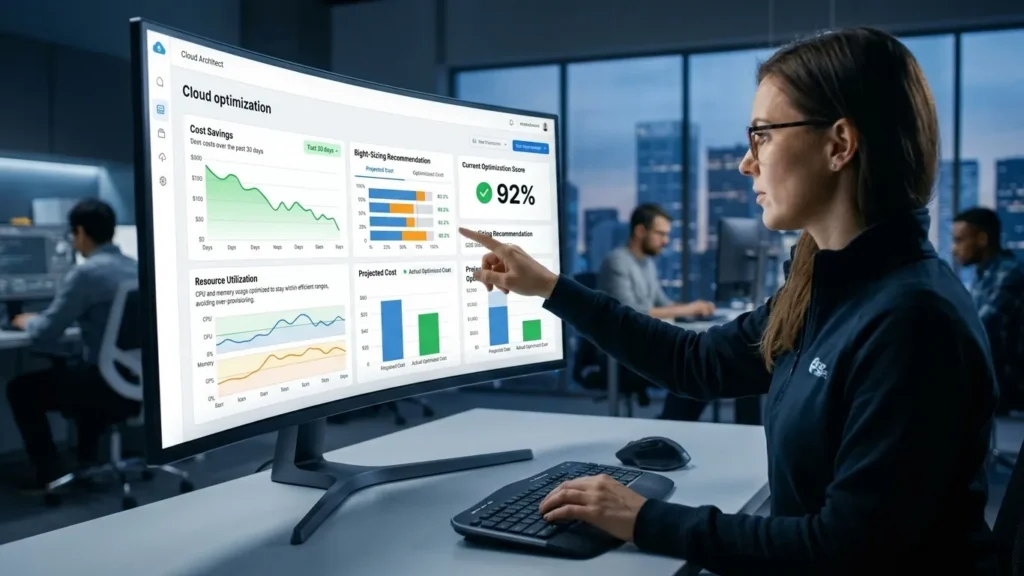
Cloud Cost Optimisation Programme

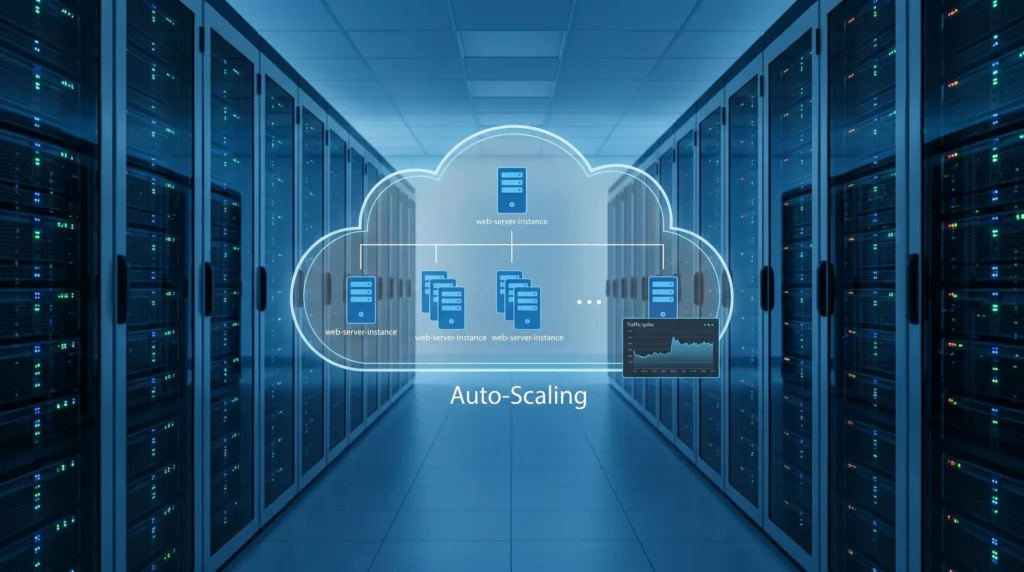
Spend analysis, right-sizing execution, reserved instance implementation, auto-scaling optimisation, waste elimination, tagging governance, and FinOps dashboards - converting cloud infrastructure from an ungoverned cost accumulator into a commercially managed platform with unit economics accountability.
Our Delivery Process for Cloud Infrastructure Engagements

Six stages from cloud strategy to governed production operations and ongoing platform optimisation.

Cloud Strategy & Assessment

Current infrastructure audit · workload portfolio assessment (7R framework) · compliance and security requirements mapping · cloud platform selection · TCO modelling · migration complexity scoring · organisational readiness · strategy and roadmap approved before architecture design begins

Architecture Design & Governance Blueprint

Landing zone design · network topology · identity and access architecture · security framework · DevSecOps pipeline design · observability stack selection · IaC toolchain · cost governance framework · compliance control mapping · blueprint peer-reviewed and approved before build begins

Foundation Build & Landing Zone Deployment

Cloud account and subscription provisioning via IaC · network infrastructure deployment · identity governance configuration · security baseline enforcement · logging and monitoring foundation · CI/CD pipeline build · cost management tagging and alerting · foundation validated against compliance requirements before workload onboarding

Workload Migration & Platform Engineering

Application migration in governed waves · containerisation and Kubernetes platform deployment · database migration · integration connectivity validation · DevSecOps pipeline integration · performance and security posture validation · stakeholder sign-off at each wave gate before subsequent wave proceeds

Security Review, Compliance Validation & Cutover

Security architecture review against compliance framework · penetration testing · vulnerability assessment · disaster recovery test · performance validation under production-representative load · compliance control evidence collection · operational runbook delivery · cutover execution with rollback capability · production approval gate before traffic cutover

Managed Operations, Optimisation & Governance

24/7 monitoring and alerting · incident management with defined SLAs · patch and vulnerability management · monthly cost optimisation reviews · quarterly security posture reviews · capacity planning · platform capability expansion · FinOps reporting · SRE practice evolution – ongoing operations protecting performance, security, and cost efficiency as requirements scale

Why Enterprises Choose Us As Their Cloud Infrastructure Partner

The difference between a cloud migration vendor and an enterprise cloud engineering partner is accountability – for architecture quality, security posture, operational reliability, and commercial outcomes.

  • Architecture-led cloud delivery aligned to workload requirements, compliance needs, and long-term operational goals.
  • Security and governance built in from day one through landing zones, policy-as-code, and compliance controls.
  • Infrastructure as Code delivered as standard, ensuring consistency, auditability, and scalable cloud operations.
  • FinOps-driven cloud engineering focused on cost visibility, optimisation, right-sizing, and sustainable cloud spend.
  • SRE and observability practices embedded with monitoring, tracing, SLIs, SLOs, and proactive incident management.
  • End-to-end ownership across cloud strategy, architecture, security, DevSecOps, Kubernetes, FinOps, and managed operations.
Don't Worry!

Our expert will solve your queries in one call.

Client Triumphs: Success Stories

Discover how our team of domain specialists have addressed industry-specific challenges and mission-critical needs. Turning your Vision into Victory, One Success Story at a time!

FAQs on Cloud Infrastructure Services

Have a question? We’re here to help.

What is the difference between cloud migration and cloud transformation?

Cloud migration focuses on moving workloads from on-premises or legacy environments to the cloud. Cloud transformation goes further by modernising operating models, engineering practices, and cloud governance to improve agility, scalability, security, and operational efficiency. Transformation ensures organisations realise the full business value of cloud adoption rather than simply changing infrastructure location.


How do you choose between AWS, Azure, and Google Cloud?

Cloud platform selection depends on your workloads, existing technology investments, compliance requirements, and business objectives. Azure is often preferred for Microsoft-centric environments, AWS for broad cloud-native capabilities, and Google Cloud for analytics, Kubernetes, and AI-driven workloads. We assess your requirements and recommend the platform – or multi-cloud strategy – that best aligns with your goals.

How do you ensure cloud infrastructure meets our compliance requirements?

Compliance is built into cloud architecture from the start. We implement security controls, identity management, encryption, audit logging, network segmentation, and automated compliance monitoring aligned to frameworks such as SOC 2, ISO 27001, GDPR, HIPAA, and PCI DSS. Continuous compliance visibility and documentation help support both regulatory and audit requirements.

What is infrastructure as code and why is it mandatory for enterprise cloud?

Infrastructure as Code (IaC) manages cloud resources through version-controlled code rather than manual configuration. It improves consistency, security, auditability, and scalability while reducing configuration drift and deployment errors. For enterprise environments, IaC provides the governance and repeatability required to manage cloud infrastructure reliably at scale.

How do you prevent cloud spend from exceeding budget?

Cloud cost management begins with architecture and governance. We implement resource optimisation, auto-scaling, cost allocation, tagging standards, reserved capacity planning, and ongoing FinOps practices to monitor and control spend. This ensures cloud costs remain aligned with business value while minimising unnecessary consumption.

How long does an enterprise cloud migration take?

Migration timelines vary by complexity and scope. Individual workloads may be migrated in 6–12 weeks, while larger programmes involving multiple applications, integrations, and compliance requirements typically span several months. Detailed planning and phased delivery help minimise risk and maintain business continuity throughout the process.

What ongoing managed services do you provide after deployment?

We provide managed cloud services including 24/7 monitoring, incident response, security management, patching, performance optimisation, disaster recovery testing, capacity planning, and cost optimisation. Services are delivered through structured governance and automation frameworks, ensuring cloud environments remain secure, resilient, and cost-effective as business needs evolve.

Still Have Questions?

Can’t find the answer you’re looking for? Please get in touch with our team.

We Empower 170+ Global Businesses

Mars Logo
Johnson Logo
Kimberly Clark Logo
Coca Cola Logo
loreal logo
Jabil Logo
Hitachi Energy Logo
SkyWest Logo

Let’s innovate together!

Engage with a premier team renowned for transformative solutions and trusted by multiple Fortune 100 companies. Our domain knowledge and strategic partnerships have propelled global businesses.
Let’s collaborate, innovate and make technology work for you!

Our Locations

101 E Park Blvd, Plano,
TX 75074, USA

1304 Westport, Sindhu Bhavan Marg,
Thaltej, Ahmedabad, Gujarat 380059, INDIA

Phone Number

+1 817 380 5522


    Loading...

    Area Of Interest *

    Explore Our Service Offerings

    Hire A Team / Developer

    Become A Technology Partner

    Job Seeker

    Other