













What You Get From Our Serverless Computing Services

Build scalable, cost-efficient, and event-driven applications with serverless architectures engineered for agility, resilience, and enterprise-grade performance.

Data Engineering Solutions for Enterprise

Our Serverless Computing Capabilities Include:

  • Serverless Application Development using AWS Lambda, Azure Functions, and Google Cloud Functions for scalable compute execution
  • Event-Driven Architecture Design enabling asynchronous, loosely coupled, and highly resilient system workflows
  • API Backend Development with serverless services, API gateways, and managed authentication layers
  • Microservices Modernisation & Decomposition transforming monolithic applications into scalable serverless components
  • Serverless Data & Integration Pipelines enabling real-time processing, event streaming, and cloud service integrations
  • Serverless CI/CD & DevOps Automation supporting automated deployment, versioning, monitoring, and observability of serverless systems

From architecture design and application development to deployment automation and operational governance, Kernshell helps enterprises operationalize serverless computing models that improve scalability, reduce infrastructure costs, and accelerate digital product delivery.

End-to-End Serverless Computing Services We Offer

Serverless Strategy & Workload Assessment

Workload characterisation assessing invocation patterns, concurrency, latency, state, execution duration, and dependencies to determine where serverless reduces cost and complexity and where containers are the better fit.

AWS Lambda Development & Optimisation

Production-ready Lambda functions engineered with optimised handlers, packaging, concurrency, IAM, observability, retries, and error handling, with performance, resilience, and security designed in from first deployment.

Azure Functions Development & Optimisation

Enterprise-ready Azure Functions engineered with appropriate hosting plans, Durable Functions orchestration, secure managed identities, cold-start mitigation, and governance controls including VNet integration, private endpoints, and policy compliance.

Google Cloud Run & Cloud Functions Development

GCP serverless solutions engineered with optimised Cloud Run and Cloud Functions Gen2 deployments, tuned concurrency and scaling, canary releases, and event-driven integration with Pub/Sub, Cloud Tasks, BigQuery, Firestore, and Cloud Storage.

Event-Driven Architecture Design & Implementation

Event-driven architectures engineered with robust schemas, messaging platforms, consumer patterns, DLQs, and idempotency controls, enabling asynchronous, decoupled services that scale elastically with event volume and avoid cascading failures.

Serverless API Development

Event-driven architectures engineered with robust schemas, messaging platforms, consumer patterns, DLQs, and idempotency controls, enabling asynchronous, decoupled services that scale elastically with event volume and avoid cascading failures.

Serverless Workflow Orchestration

Managed workflow orchestration using AWS Step Functions, Azure Durable Functions, and Google Cloud Workflows to execute long-running, stateful processes with retries, parallelism, approvals, and built-in reliability, visibility, and auditability.

Serverless Data Processing & ETL

Event-driven serverless data pipelines process data as it arrives using services such as Lambda, Cloud Functions, Glue, BigQuery, and DynamoDB, delivering elastic ETL with costs aligned to actual processing volume rather than idle capacity.

Serverless Security Architecture

Serverless security engineered with least-privilege IAM, secrets encryption, private networking, trigger access controls, dependency scanning, and OWASP-aligned protections tailored to serverless threat models and blast-radius risks.

Serverless Cost Optimisation

Serverless cost optimisation through memory tuning, right-sized timeouts and provisioned concurrency, and architectural patterns that reduce unnecessary invocations while maintaining performance and responsiveness.

Our MLOps Technology Stack

Production-proven platforms selected based on your cloud environment, existing data infrastructure, and compliance requirements – not our defaults.

  • All
  • Languages
  • Gen AI platforms
  • Frameworks
  • Debugging & Tracing
  • Vector Databases
  • DBMS
  • Data Visualization

Languages

C#

C#

Rust

Rust

Python

Python

JavaScript

JavaScript

Java

Java

R

R

Gen AI platforms

LangChain

LangChain

Hugging Face

Hugging Face

Apache Spark

Apache Spark

Gemini

Gemini

Phi

Phi

Frameworks

LangChain

LangChain

LlamaIndex

LlamaIndex

PyTorch

PyTorch

Kedro

Kedro

TensorFlow

TensorFlow

Keras

Keras

Debugging & Tracing

Langsmith

Langsmith

Langfuse

Langfuse

Vector Databases

PostgreSQL

PostgreSQL

Chroma

Chroma

Milvus

Milvus

Qdrant

Qdrant

Pinecone

Pinecone

DBMS

PostgreSQL

PostgreSQL

MySQL

MySQL

MongoDB

MongoDB

CouchDB

CouchDB

Cassandra

Cassandra

Neo4j

Neo4j

Data Visualization

Power BI

Power BI

Tableau

Tableau

Languages

C#

C#

Rust

Rust

Python

Python

JavaScript

JavaScript

Java

Java

R

R

Gen AI platforms

LangChain

LangChain

Hugging Face

Hugging Face

Apache Spark

Apache Spark

Gemini

Gemini

Phi

Phi

Frameworks

LangChain

LangChain

LlamaIndex

LlamaIndex

PyTorch

PyTorch

Kedro

Kedro

TensorFlow

TensorFlow

Keras

Keras

Debugging & Tracing

Langsmith

Langsmith

Langfuse

Langfuse

Vector Databases

PostgreSQL

PostgreSQL

Chroma

Chroma

Milvus

Milvus

Qdrant

Qdrant

Pinecone

Pinecone

DBMS

PostgreSQL

PostgreSQL

MySQL

MySQL

MongoDB

MongoDB

CouchDB

CouchDB

Cassandra

Cassandra

Neo4j

Neo4j

Data Visualization

Power BI

Power BI

Tableau

Tableau

Ready to Build a Serverless Architecture That Scales Instantly?

Image
Image

Where Serverless Computing Delivers Enterprise-Grade Impact Across Functions

Serverless Computing Solutions We Can Design, Build & Integrate

Serverless Computing Solutions We Can Design, Build & Integrate

Intro: Proven serverless solution patterns – purpose-engineered for enterprise scale, event-driven integration, and production operational requirements.

Data Engineering Services
Event-Driven Serverless Platform

Event-driven architectures route events to serverless functions for elastic, asynchronous processing, eliminating pre-provisioned capacity while isolating failures and scaling throughput to demand.
Serverless API Platform

API gateways front-end serverless functions with authentication, rate limiting, caching, and routing, while back-end functions execute business logic with cold-start mitigation applied only to latency-sensitive endpoints.

Serverless Data Processing Pipeline

Event-driven ETL pipelines use serverless functions to transform and load data from streams and notifications, with compute costs incurred only during active processing rather than idle batch windows.

Serverless Workflow Orchestration Platform

Serverless workflow orchestration using Step Functions and Durable Functions executes long-running business processes with built-in retries, error handling, and audit trails, without custom workflow engines or application servers.

Serverless Microservices Architecture

Serverless microservices built as independently deployable and scalable functions, communicating through event buses to enable loose coupling and independent delivery without sidecar infrastructure.

IoT & Real-Time Event Processing

Serverless IoT pipelines ingest device telemetry and process it in real time through functions that transform, enrich, and analyse data, scaling elastically to unpredictable message bursts without over-provisioned compute.

Serverless Migration Programme

Structured migration of suitable workloads to serverless through assessment, cost modelling, refactoring, and phased delivery, prioritising high-value, low-risk migrations and validating patterns before wider adoption.

Regulated Serverless Architecture

Compliant serverless architectures using private networking, encryption, least-privilege IAM, audit logging, and IaC-based deployment controls, meeting regulatory requirements without persistent server infrastructure.
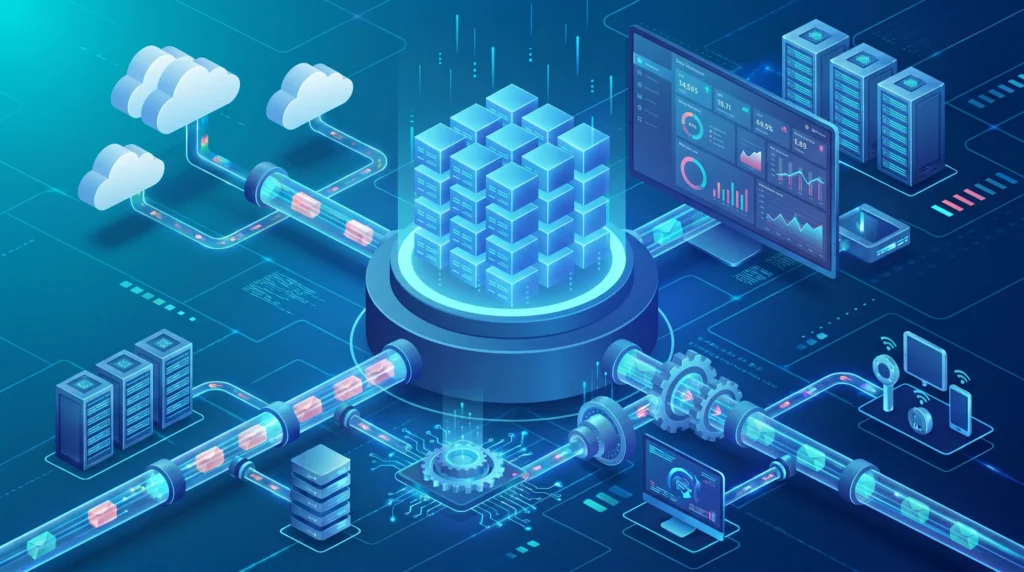

Our Process For Serverless Computing Delivery

A six-stage delivery process – from workload assessment through governed, optimised, and observable production serverless architecture.

Serverless Strategy & Workload Assessment

Workload characterisation – invocation patterns, concurrency, latency sensitivity, execution duration, state requirements · serverless suitability scoring · cost modelling against current infrastructure · cold start impact analysis · vendor lock-in assessment → serverless adoption roadmap defining which workloads migrate, which remain on containers or managed compute, and in what sequence.

Data Strategy
Architecture Design & Technology Selection
Architecture Design & Integration Planning

Function boundary design · event source and routing architecture · API Gateway or event bus design · state management strategy · security architecture (IAM, KMS, VPC) · observability design · IaC framework selection → reviewed by engineering, security, and cloud stakeholders before development begins.

Function Development & Integration

Function handler implementation · dependency packaging · Lambda layer or container image strategy · event source integration · API Gateway or trigger configuration · IAM execution role design · environment variable and secrets management · dead-letter queue configuration → functions unit tested and integration tested against event sources before deployment to any shared environment.

Infrastructure Provisioning & Pipeline Foundation
Performance Engineering & Cold Start Optimisation

Lambda Power Tuning execution across memory configurations · cold start duration measurement · provisioned concurrency right-sizing · timeout configuration tightening · dependency bundle size reduction · connection pooling for database-integrated functions → performance profile characterised and optimised before load testing begins.

Load Testing, Security Review & Production Readiness

Load testing with Artillery or k6 — concurrent invocation testing, throttling behaviour, error rate under load, and cold start distribution under realistic traffic · security review — IAM least-privilege validation, secrets management verification, VPC configuration review · IaC deployment pipeline validation → production readiness confirmed before live traffic.

Quality Assurance, Security Review & Governance Onboarding
Production Deployment & DataOps
Production Deployment, Observability & Continuous Optimisation

IaC-governed production deployment · distributed tracing activation · structured logging configuration · cold start monitoring · cost dashboard deployment · alerting policy configuration · monthly cost and performance review → serverless workload performance and cost governed continuously as invocation patterns, business volumes, and architectural requirements evolve.

Why Enterprises Choose Us As Their Serverless Computing Partner

The difference between a cloud provider promoting serverless and a serverless engineering partner is accountability for production performance, cost efficiency, and workload suitability – not function deployment volume.

  • Suitability-first design with upfront evaluation of cold starts, cost models, state handling, and vendor lock-in risks before architecture commitment.
  • Production-grade function engineering with built-in observability, retries, idempotency, security controls, and resilience patterns from day one.
  • Cost governance from the outset using tuning, right-sizing, and invocation modelling to prevent unexpected scale-driven billing.
  • Event-driven architecture expertise covering schema design, messaging strategy, consumer patterns, and reliability at scale.
  • Serverless-native observability with tracing, structured logs, cold start monitoring, and cost visibility tailored to ephemeral execution.
  • Compliance-ready serverless design aligned with SOX, ISO 27001, HIPAA, and FDA through secure, auditable cloud-native controls.
Don't Worry!

Our expert will solve your queries in one call.

Client Triumphs: Success Stories

Discover how our team of domain specialists have addressed industry-specific challenges and mission-critical needs. Turning your Vision into Victory, One Success Story at a time!

FAQs on Serverless Computing Services

Have a question? We’re here to help.

What is serverless computing and what does Kernshell deliver?

Serverless computing runs application code in response to events or requests without managing underlying servers, with infrastructure automatically handled by the cloud provider. Kernshell delivers serverless strategy, architecture design, function development, event-driven systems, integrations, observability, security, performance optimisation, and infrastructure-as-code deployment for production-ready serverless solutions.

Is serverless right for every workload?

No. Serverless is best suited for variable, event-driven, or low-utilisation workloads, and may not be cost-effective or suitable for consistently high traffic, long-running processes, or low-latency critical systems. We assess workload characteristics and cost models before recommending serverless adoption.

What is a cold start and how does Kernshell mitigate it?

A cold start occurs when a serverless function is invoked after inactivity, requiring the cloud provider to initialise a new execution environment. We mitigate this through runtime optimisation, dependency reduction, provisioned concurrency, and architectural design that routes latency-sensitive workloads to pre-warmed execution paths.

How does Kernshell approach serverless security?

Serverless security is implemented using least-privilege IAM roles, encrypted secrets management, secure API exposure, VPC isolation where needed, and continuous vulnerability scanning in CI/CD pipelines. Each function is secured based on its specific access and execution requirements.

How long does a serverless engagement take with Kernshell?

A focused serverless implementation typically takes 6–10 weeks. Larger enterprise programmes involving multiple workloads, event-driven architectures, and optimisation layers usually take 12–20 weeks depending on complexity and integration scope.

How does Kernshell optimise serverless cost?

We optimise serverless costs through right-sizing memory and compute configurations, reducing execution time, minimising unnecessary invocations, tuning concurrency settings, and refining event-driven architectures to eliminate inefficiencies. Cost efficiency is validated through real workload profiling.

Does Kernshell implement serverless for regulated industries?

Yes. We design serverless solutions for regulated industries with built-in compliance controls including audit logging, encryption, IAM governance, network isolation, and CI/CD traceability. These ensure alignment with regulatory requirements such as HIPAA, GDPR, ISO 27001, and financial compliance frameworks.

Still Have Questions?

Can’t find the answer you’re looking for? Please get in touch with our team.

We Empower 170+ Global Businesses

Mars Logo
Johnson Logo
Kimberly Clark Logo
Coca Cola Logo
loreal logo
Jabil Logo
Hitachi Energy Logo
SkyWest Logo

Let’s innovate together!

Engage with a premier team renowned for transformative solutions and trusted by multiple Fortune 100 companies. Our domain knowledge and strategic partnerships have propelled global businesses.
Let’s collaborate, innovate and make technology work for you!

Our Locations

101 E Park Blvd, Plano,
TX 75074, USA

1304 Westport, Sindhu Bhavan Marg,
Thaltej, Ahmedabad, Gujarat 380059, INDIA

Phone Number

+1 817 380 5522


    Loading...

    Area Of Interest *

    Explore Our Service Offerings

    Hire A Team / Developer

    Become A Technology Partner

    Job Seeker

    Other