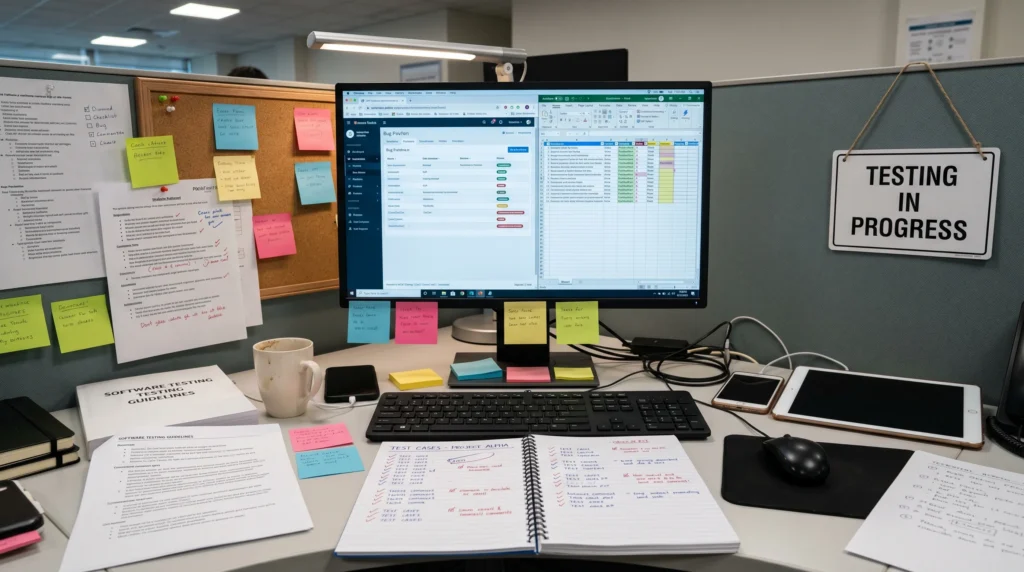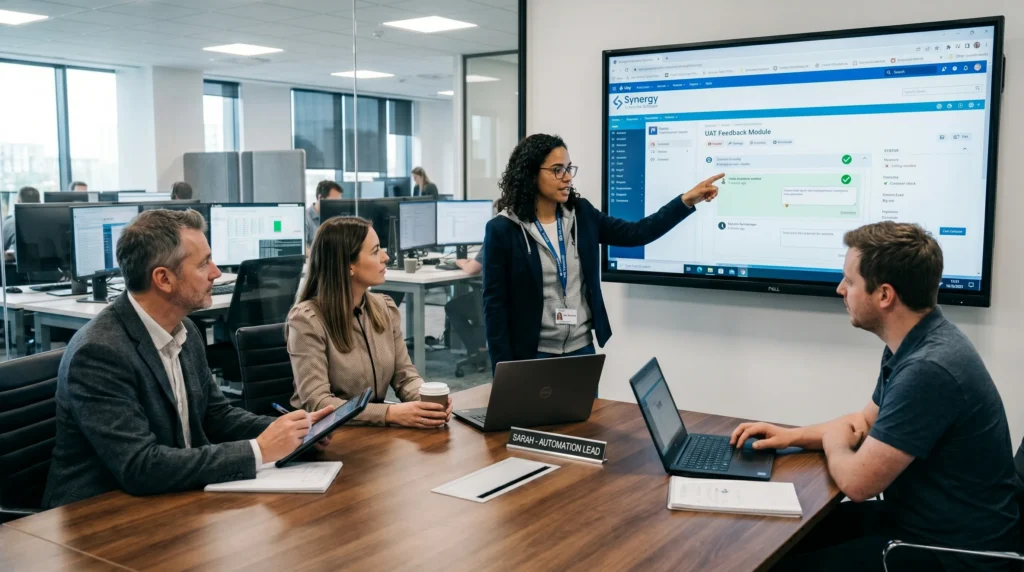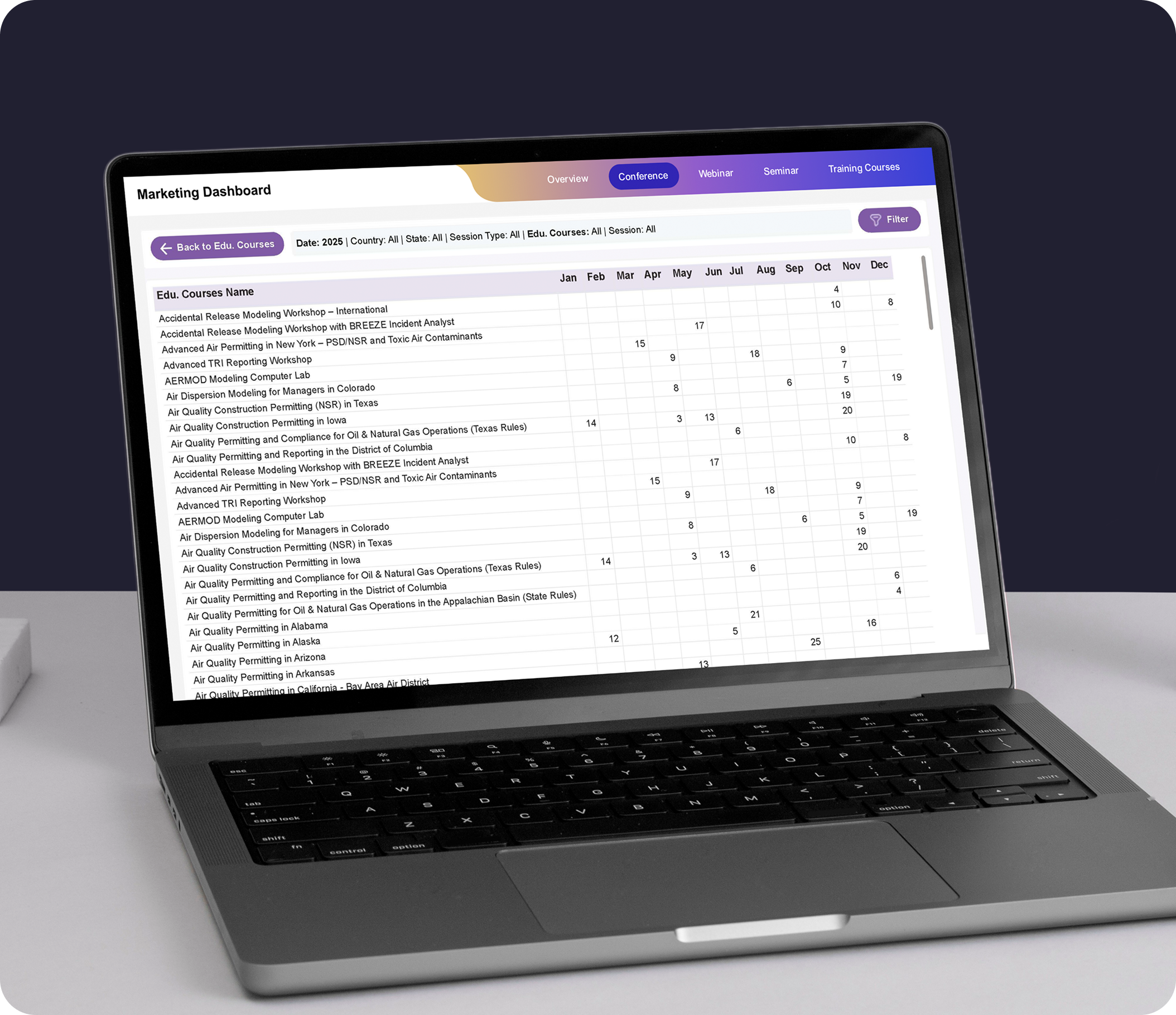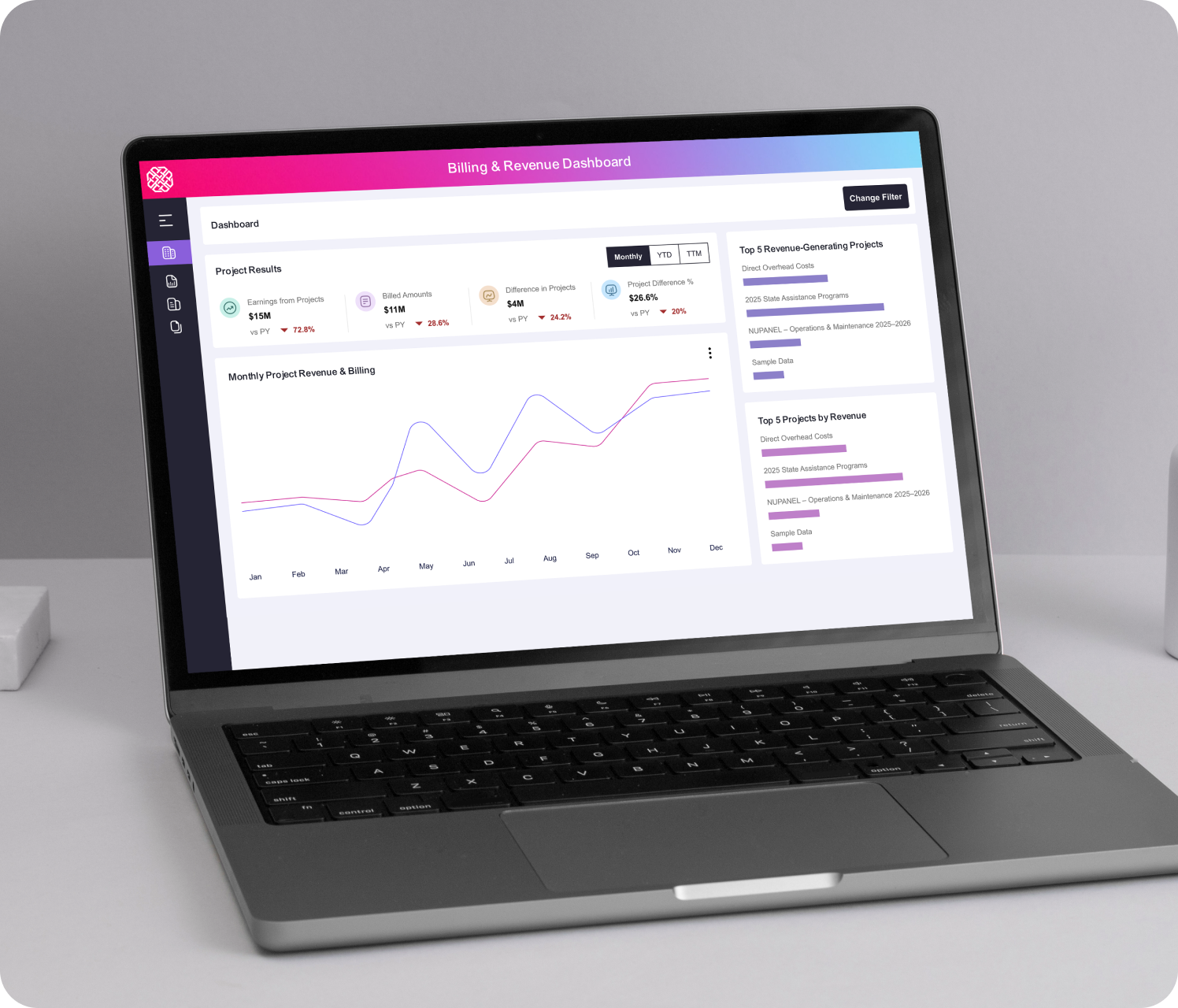














What Kernshell Builds: Manual Testing Services for Enterprise

Transform software quality assurance with enterprise manual testing services engineered for accuracy, usability, compliance, and operational reliability.

We design manual testing frameworks aligned to operational workflows, release governance, compliance standards, and enterprise application ecosystems – enabling organizations to deliver stable, user-ready, and business-critical software with confidence.

Our Manual Testing Capabilities Include:

  • Functional Testing validating application workflows, business logic, and operational requirements
  • Exploratory Testing identifying usability gaps, edge cases, and real-world operational risks
  • User Acceptance Testing (UAT) support ensuring business readiness and stakeholder validation
  • Cross-Browser & Cross-Device Testing improving experience consistency across environments
  • Regression & Compatibility Testing maintaining application stability during releases and updates
  • QA Governance & Defect Reporting providing centralized visibility and release quality control

From test planning and execution to reporting and release validation, Kernshell helps enterprises operationalize manual testing frameworks that improve software reliability, user satisfaction, and enterprise-wide delivery quality.

End-to-End Manual Testing Services We Offer

Test Planning & Strategy

Risk-based test planning covering scope, priorities, test approaches, environments, data strategy, defect management, and release criteria—aligning testing effort to business risk, compliance needs, application architecture, and delivery timelines to maximise quality and release confidence.

Functional Testing

Functional testing across application modules, business workflows, integrations, and validation rules – performed by testers with domain understanding of the processes being supported. Ensures software behaves correctly in real-world operating conditions and identifies issues that impact business outcomes, not just technical requirements.

Exploratory Testing

Structured exploratory testing using session-based methods, test charters, and time-boxed investigations to uncover high-risk defects, integration issues, and real-world usage problems. Delivered with documented findings, coverage records, and actionable defect reports for traceable quality assurance.

Regression Testing

Risk-based regression testing focused on impacted features, integration paths, and historically defect-prone areas. Scope is driven by change impact analysis, ensuring testing effort targets the highest-risk areas while maintaining release confidence and avoiding unnecessary full-suite execution.

User Acceptance Testing (UAT)

User Acceptance Testing (UAT) programmes covering scenario design, stakeholder facilitation, defect management, issue tracking, and release sign-off. Structured, evidence-based validation supports governance, audit, compliance, and informed go/no-go decisions before production deployment.

Usability & UX Testing

Usability testing with representative users through moderated sessions, task-based evaluations, and think-aloud studies. Findings are delivered as severity-rated issues with actionable recommendations, identifying navigation, workflow, and interaction problems before they affect production users.

Cross-Browser & Cross-Device Testing

Cross-browser and cross-device testing across the operating systems, browsers, viewports, and devices used by your audience. Analytics-driven test coverage identifies rendering, layout, and interaction issues, ensuring consistent user experiences across real-world environments.

API & Integration Testing

Manual API testing using Postman, Insomnia, and curl for endpoint validation, authentication, error handling, boundary conditions, and integration workflows. Complements automated testing by exploring edge cases, unexpected behaviours, and contract scenarios that require human investigation and judgement.

Accessibility Manual Testing

Manual accessibility testing with NVDA, JAWS, VoiceOver, and keyboard-only navigation validates reading order, focus management, ARIA labels, error clarity, and complex interactions. Combined with automated axe-core scanning, it provides stronger evidence of WCAG 2.1/2.2 compliance and accessibility readiness.

Compliance & Regulated Release Testing

Regulated software testing with compliant execution records, IQ/OQ/PQ protocols, defect tracking, deviation management, and audit-ready reporting. Documentation is produced throughout testing to support FDA 21 CFR Part 11, EU Annex 11, GAMP 5, SOX, and other regulated industry requirements.

Our Core Manual Testing Technology Stack

Tools, platforms, and methodologies applied based on your application environment, regulatory requirements, and test programme maturity – not tool familiarity.

  • All
  • Languages
  • Gen AI platforms
  • Frameworks
  • Debugging & Tracing
  • Vector Databases
  • DBMS
  • Data Visualization

Languages

C#

C#

Rust

Rust

Python

Python

JavaScript

JavaScript

Java

Java

R

R

Gen AI platforms

LangChain

LangChain

Hugging Face

Hugging Face

Apache Spark

Apache Spark

Gemini

Gemini

Phi

Phi

Frameworks

LangChain

LangChain

LlamaIndex

LlamaIndex

PyTorch

PyTorch

Kedro

Kedro

TensorFlow

TensorFlow

Keras

Keras

Debugging & Tracing

Langsmith

Langsmith

Langfuse

Langfuse

Vector Databases

PostgreSQL

PostgreSQL

Chroma

Chroma

Milvus

Milvus

Qdrant

Qdrant

Pinecone

Pinecone

DBMS

PostgreSQL

PostgreSQL

MySQL

MySQL

MongoDB

MongoDB

CouchDB

CouchDB

Cassandra

Cassandra

Neo4j

Neo4j

Data Visualization

Power BI

Power BI

Tableau

Tableau

Languages

C#

C#

Rust

Rust

Python

Python

JavaScript

JavaScript

Java

Java

R

R

Gen AI platforms

LangChain

LangChain

Hugging Face

Hugging Face

Apache Spark

Apache Spark

Gemini

Gemini

Phi

Phi

Frameworks

LangChain

LangChain

LlamaIndex

LlamaIndex

PyTorch

PyTorch

Kedro

Kedro

TensorFlow

TensorFlow

Keras

Keras

Debugging & Tracing

Langsmith

Langsmith

Langfuse

Langfuse

Vector Databases

PostgreSQL

PostgreSQL

Chroma

Chroma

Milvus

Milvus

Qdrant

Qdrant

Pinecone

Pinecone

DBMS

PostgreSQL

PostgreSQL

MySQL

MySQL

MongoDB

MongoDB

CouchDB

CouchDB

Cassandra

Cassandra

Neo4j

Neo4j

Data Visualization

Power BI

Power BI

Tableau

Tableau

Ready to Release with Confidence Through Expert Manual Testing?

Image
Image

Where Manual Testing Delivers Enterprise-Grade Impact Across Functions

Manual Testing Solutions We Can Design, Build & Integrate

Proven manual testing programme patterns – purpose-engineered for enterprise software complexity, regulated industry requirements, and structured release assurance.

Create_images_for_quality_testing_202606161351
Enterprise Functional Testing Programme

Structured functional testing covering planning, risk-based test design, execution, defect management, and release reporting. Test coverage is prioritised by business risk, focusing effort on critical workflows, integrations, and data validation scenarios to maximise release confidence and defect detection.

Exploratory Testing Programme

Session-based exploratory testing with defined charters, time-boxed investigations, coverage tracking, and structured defect reporting. Focused on new features, complex workflows, and integration points, delivering documented findings and measurable coverage beyond scripted test execution.

UAT Design & Facilitation

User Acceptance Testing (UAT) programmes covering business scenario design, stakeholder coordination, environment readiness, defect management, resolution tracking, and formal sign-off. Validation is aligned to business outcomes and operational readiness, providing evidence-based confidence for go-live decisions.

Regulated Software Testing Programme

Regulated testing programmes with IQ/OQ/PQ protocols, traceable test cases, compliant evidence capture, deviation management, defect classification, and audit-ready reporting. Documentation is structured from the outset to support regulatory inspections, validation requirements, and controlled release processes.

Usability Testing Programme

Usability testing programmes covering participant recruitment, scenario design, moderated sessions, task analysis, and severity-rated findings. Integrated before release, providing actionable recommendations that resolve usability issues early and reduce costly post-launch rework.

Cross-Platform Compatibility Testing

Compatibility testing across browsers, devices, operating systems, and viewports, validating rendering, interactions, and functionality. Coverage is guided by user analytics, focusing testing effort on the platforms and configurations that matter most to your audience.

Accessibility Manual Testing Programme

Manual WCAG 2.1/2.2 accessibility testing with NVDA, JAWS, VoiceOver, and keyboard navigation, assessing reading order, focus management, labels, and complex interactions. Findings are mapped to WCAG criteria with prioritised remediation guidance and audit-ready compliance evidence.

Data Migration Testing

Data migration validation covering profiling, execution monitoring, reconciliation, integrity checks, and business-rule verification. Go-live decisions are based on proven data accuracy, completeness, and usability across critical business entities - not record counts alone.


Our Process For Manual Testing Delivery

A six-stage delivery process – from test strategy through structured execution, defect resolution, and governed release sign-off.

Test Strategy & Planning

Application and release scope analysis · risk-based test prioritisation · test approach selection · environment and test data requirements · entry and exit criteria · defect management process · compliance documentation requirements → test plan reviewed and approved by engineering, product, and quality stakeholders before test design begins.

Test Design & Preparation

Test case authoring · exploratory test charter development · UAT scenario design · test data preparation · environment validation · regulatory traceability matrix (where required) → test design reviewed for coverage completeness and risk alignment before execution begins.

Test Execution

Structured test execution against approved test cases · exploratory session execution with session note capture · defect logging with severity classification, reproduction steps, evidence capture, and environment details · daily execution status reporting → defects raised and triaged in real time throughout execution, not batched at end-of-cycle.

Defect Management & Triage

Defect severity and priority classification · root cause analysis support · development team triage facilitation · re-test on fix verification · regression impact assessment of fixes · defect trend reporting → defect backlog managed to release exit criteria throughout the test cycle.

UAT Facilitation & Sign-Off

UAT session facilitation · stakeholder defect triage · issue prioritisation and resolution tracking · go/no-go recommendation with supporting test evidence · formal sign-off documentation → release decision made on structured evidence, not on elapsed UAT time.

Test Closure & Release Reporting

Test summary report · defect escape analysis · coverage gap documentation · known issue register · regulatory submission documentation (where required) · lessons learned → complete test programme record archived for release governance, compliance audit, and future test planning reference.

Why Enterprises Choose Us As Their Manual Testing Partner

The difference between a testing service provider and a manual testing partner is accountability – for defect discovery quality, release confidence, and compliance evidence integrity, not test execution throughput.

  • Domain-focused testing delivered by specialists with industry, business process, and application expertise.
  • Structured exploratory testing using proven methodologies to maximise defect discovery and coverage visibility.
  • Extensive experience supporting regulated industries with compliance-ready testing and audit evidence.
  • End-to-end UAT management ensuring meaningful stakeholder validation and release confidence.
  • Risk-based testing strategies that balance manual and automated testing for maximum quality and efficiency.
  • Outcome-driven delivery measured by defect prevention, release quality, compliance readiness, and reduced production issues.
Don't Worry!

Our expert will solve your queries in one call.

Client Triumphs: Success Stories

Discover how our team of domain specialists have addressed industry-specific challenges and mission-critical needs. Turning your Vision into Victory, One Success Story at a time!

FAQs on Manual Testing Services

Have a question? We’re here to help.

What is manual testing and what does Kernshell deliver?

Manual testing is the structured application of human judgement to software validation – functional testing, exploratory testing, usability evaluation, UAT facilitation, compatibility testing, and compliance-evidenced testing – covering the scenarios where tester cognition, domain knowledge, and adversarial reasoning identify defects that automated scripts do not detect. Kernshell delivers end-to-end: test strategy, test design, structured execution, defect management, UAT facilitation, compliance documentation, and release reporting – with accountability for defect discovery quality, release confidence, and compliance evidence integrity.

When should enterprises use manual testing versus automation?

Automation excels at regression coverage, API contract verification, performance baselines, and high-frequency repetitive scenarios where consistency and speed generate more value than human judgement. Manual testing delivers superior results in exploratory scenario discovery, new feature validation where test conditions are not yet defined precisely enough to automate, usability and user experience evaluation, complex business logic validation requiring domain reasoning, and compliance-evidenced testing requiring documented human judgement and decision-making. Kernshell recommends test programmes that allocate manual effort to the scenarios where human judgement is irreplaceable and automation investment to the scenarios where consistency and repeatability compound value over time.

How does Kernshell structure and facilitate UAT?

UAT begins with business use case scenario development aligned to the decisions the software supports – not functional specification walkthroughs. Stakeholder communication and environment preparation managed before sessions begin. UAT sessions facilitated with defect triage and severity classification during execution – not post-UAT defect volume review when the release timeline is already under pressure. Defect resolution tracking and re-test verification managed through UAT closure. Formal sign-off documentation providing the release governance evidence that regulated and controlled organisations require – stakeholder confidence in go-live readiness grounded in structured test records.

What is exploratory testing and how does Kernshell structure it?

Exploratory testing is structured investigation of software using tester knowledge, intuition, and domain reasoning – applied to areas where scripted tests provide insufficient coverage and where defects emerge from real-world usage patterns rather than from deviations from specification. Kernshell structures exploratory testing using Session-Based Test Management (SBTM) – charters defining investigation scope and objectives, time-boxed sessions with session notes capturing discoveries and coverage, and debrief reviews documenting findings. Structured exploratory testing produces documented discovery evidence and coverage records that justify the investment and inform subsequent test programme decisions.

How does Kernshell produce compliance evidence in regulated testing programmes?

Test cases authored with regulatory traceability – requirement references, acceptance criteria, and risk classification mapped to every test case before execution. Test execution records capture tester identity, execution timestamp, environment version, actual result, and pass/fail determination for every test case – produced during execution in the format required for regulatory inspection. Deviations and defects classified by severity, investigated, and documented with resolution evidence. Formal test summary report produced at programme closure. Every compliance document structured from the first test plan session to meet the evidentiary requirements of your specific regulatory framework – FDA 21 CFR Part 11, EU Annex 11, GAMP 5, ISO 13485, or SOX IT controls.

How long does a manual testing engagement take with Kernshell?

A focused functional and exploratory testing cycle for a defined release scope – test planning, test design, execution, defect management, and release report – typically runs 3–6 weeks depending on application complexity, feature scope, and environment availability. Regulated software testing programmes with full compliance documentation are scoped by module count, risk classification, and documentation standard requirements – typically 6–16 weeks per release. Ongoing testing partnerships are structured as retained engagements with capacity allocated per sprint or release cycle.

Does Kernshell provide manual testing alongside QA automation?

Yes – and Kernshell recommends integrated test strategies that apply manual testing where human judgement generates defect discovery value that automation cannot replicate, and automation where consistency and repeatability compound return over time. Manual exploratory testing discovering the defects that automated regression suites do not anticipate. UAT and usability testing requiring stakeholder and user participation. Compliance-evidenced testing requiring documented human decision-making. Automation covering regression, API contracts, performance, and security baselines. The combined programme delivering the release confidence that neither discipline achieves independently at the coverage depth enterprise software quality requires.

Still Have Questions?

Can’t find the answer you’re looking for? Please get in touch with our team.

We Empower 170+ Global Businesses

Mars Logo
Johnson Logo
Kimberly Clark Logo
Coca Cola Logo
loreal logo
Jabil Logo
Hitachi Energy Logo
SkyWest Logo

Let’s innovate together!

Engage with a premier team renowned for transformative solutions and trusted by multiple Fortune 100 companies. Our domain knowledge and strategic partnerships have propelled global businesses.
Let’s collaborate, innovate and make technology work for you!

Our Locations

101 E Park Blvd, Plano,
TX 75074, USA

1304 Westport, Sindhu Bhavan Marg,
Thaltej, Ahmedabad, Gujarat 380059, INDIA

Phone Number

+1 817 380 5522


    Loading...

    Area Of Interest *

    Explore Our Service Offerings

    Hire A Team / Developer

    Become A Technology Partner

    Job Seeker

    Other