



















What’s New in Microsoft 365: 2026 AI Features CEOs & Teams Should Know
Over the past few years, Microsoft has gradually evolved Microsoft 365 from a productivity suite into a true intelligent workplace platform — powered by AI, automation, and advanced collaboration tools. 2026 marks one of the most significant upgrade years yet, with new AI capabilities that are reshaping how leaders plan decisions, how teams execute work, and how organizations protect data.
Today, CEOs, CIOs, operations heads, and business managers are no longer just using M365 to “get the job done.” Instead, they are using Microsoft 365 as a digital ecosystem that:
-
- Automates previously manual work
- Summarizes data and decisions
- Reduces operational errors
- Accelerates delivery
- Boosts employee productivity
If your organization is using Microsoft 365 or planning an upgrade, explore the top AI-powered innovations for 2026, explained from both business and implementation perspectives.
1. AI-Powered Copilot Across Every Productivity Application
Microsoft Copilot is no longer an optional add-on, it’s built directly into Microsoft 365 to power everyday work with AI.
| Outlook | Team | Excel |
| Word | PowerPoint | SharePoint |
| OneNote | ||
and even Windows 11 enterprise.
What’s new in 2026?
Personalized Role-Based AI Agents:
Earlier versions of Copilot were task-based. Today, you can create “agents” that learn corporate context and adapt to functional roles.
Examples:
-
- A Project Execution Agent – Generates status reports, risk assessments, and follow-ups.
- A Sales Follow-up Agent – Drafts proposals, reminders, pricing follow-ups, and summaries.
- A Leadership Summary Agent – Aggregates results into executive dashboards.
For CIOs — this means replicable, automated workflows without added staffing or third-party tools.
2. Copilot Studio for Custom AI Workflow Automation
Copilot Studio is one of the most powerful Microsoft 365 releases in 2026.
It allows organizations to build:
| Custom AI assistants | FAQ responders | Approval-flow bots |
| Knowledge-base agents | Policy and compliance agents | |
without writing extensive code.
Why leaders love this feature:
-
- Reduces dependency on expensive integrations
- Automates repetitive knowledge transfer
- Maintains consistent tone and process execution
- Improves departmental accountability
Example use case:
A healthcare organization created a Copilot Studio bot to:
-
- Answer compliance questions
- Provide “what to do” recommendations
- Auto-provide SOP links
- Generate compliance paperwork
Time saved: ~41% per employee weekly
Risk reduced: accuracy improved from policy misinterpretation
3. AI-Generated Power BI-Style Reporting Inside Excel
Until now, generating executive-ready reports required BI teams.
Not anymore.
You can now ask Excel:
-
- “Create a profitability summary for Q1-Q4”
- “Show me customer churn drivers”
- “Highlight revenue anomalies by region”
Copilot then:
-
- Cleans data
- Formats it visually
- Adds explanations
Why this matters for CEOs
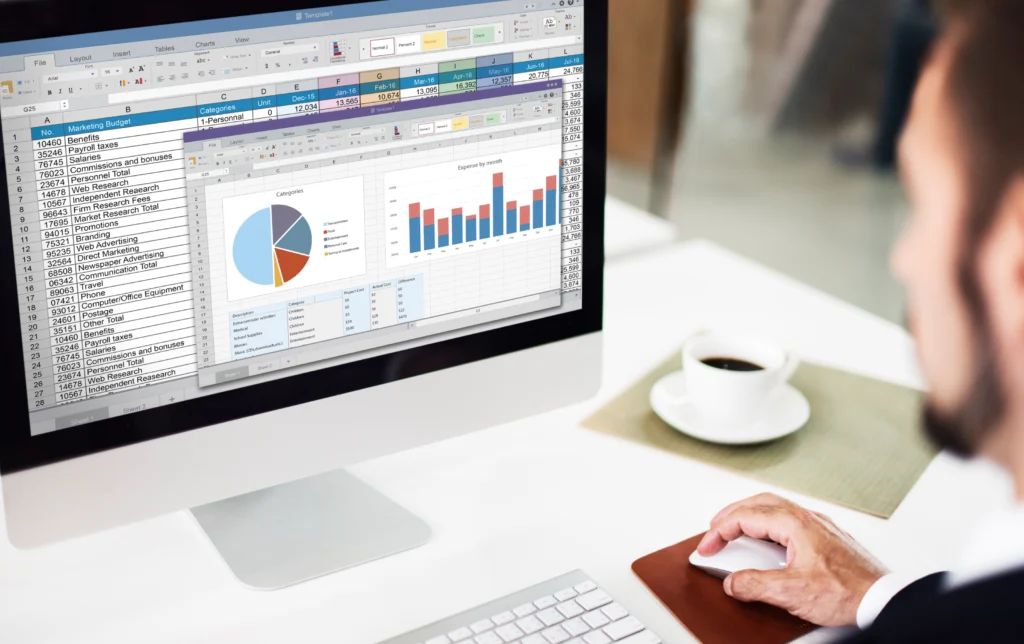
Instead of asking analysts for data summaries, leaders get:
-
- Decision-ready outputs
- Trend-line logic
- Reasoning behind fluctuations
Example output text:
“Revenue margin decreased 13.4% due to increase in logistics expenditure and employee overtime hours in the Northeast region.”
That is decision-making intelligence – not just numbers.
4. Teams AI Recording Summaries and Action Mapping
Teams AI features now provide:
| Meeting summaries | Action items | Owner tags |
| Follow-up reminders | Document references | Sentiment context |
After each meeting, you may receive:
| A summary email | Bullet-style minute |
| Document Attachments | |
Example summary output:
“Three risks were mentioned regarding client project delays. Assigned owners: Chris (Data Fixes), Michael (Testing), Anna (Client Communication). Recommended timeline: 4-7 days.”
For executives, this replaces:
| Manual note-making | Delegation confusion |
| Lost accountability | |
For HR & compliance teams — it provides recorded documentation.
5. PowerPoint AI Story Builder
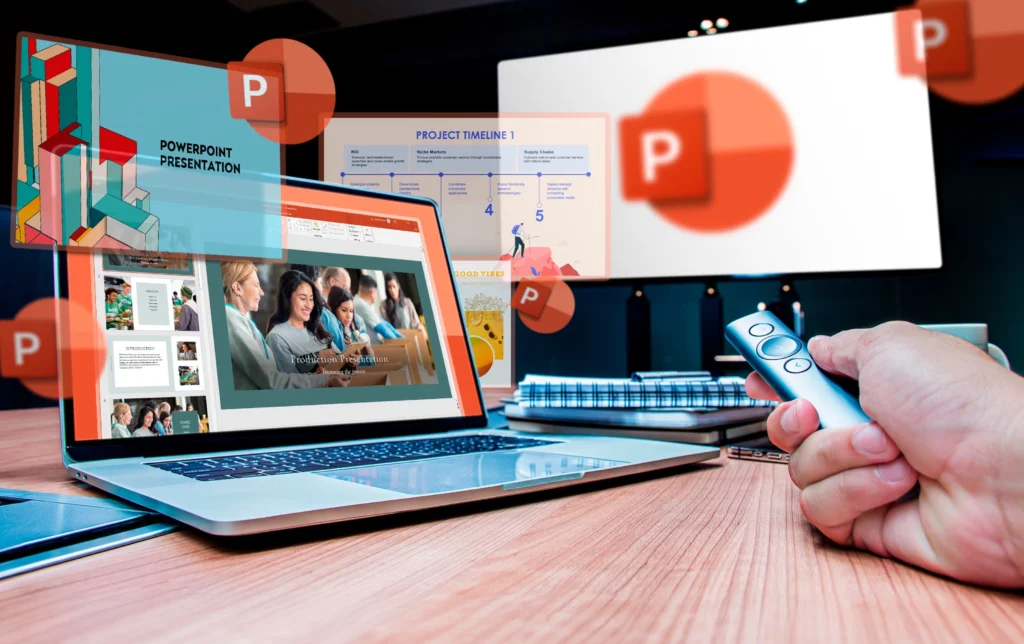
No more slide formatting struggles.
You can request:
-
- “Create an investor update deck”
- “Build a training module for onboarding”
- “Prepare risk summary slide from previous review call”
Latest additions:
-
- AI Story Flow restructuring
- Speaker notes auto-generated
- Rewrite slides for stakeholder type
- Slide intelligence suggestions
- Auto-brand template application
Example:
-
- CEO Version = High-Level KPIs
- Operations Version = Detailed execution breakdown
This improves internal communication dramatically.
6. AI-First Document Governance & Risk Intelligence
Growing AI content means growing security concerns.
Microsoft introduced:
- Content risk scoring
AI detects:
| Sensitive content | Misaligned messaging |
| Regulatory breach risks | |
- Auto-flag compliance references
Example: “This email mentions PHI data. Please verify HIPAA guidelines.”
- Auto-classification in SharePoint
Content automatically receives:
| Confidential | Internal Use |
| Finance-Restricted | Export-Blocked |
As organizations generate more automated AI outputs, governance systems ensure trust and compliance remain intact.
7. Microsoft Loop + AI for Real Work Management
Loop has evolved into a real-time, context-aware workspace, enabling distributed teams to work synchronously.
What’s new:
| AI task distribution | Timeline estimation | Collaborative whiteboarding |
| Document assembly | Cross-tool publishing | |
Use case:
A CEO defines objectives
| Copilot breaks into projects | Loop assigns owners |
| Teams tracks execution | |
The result?
Teams operate more like an engineering sprint model — even outside IT projects.
8. Windows 365 + AI Identity Layer for Workforce Mobility
In 2025, cloud PCs and AI-based identity access are essential to scalable workplaces.
Major upgrades include:
-
- Adaptive identity risk detection
- Passkey sign-ins
- Geo-based access behavior monitoring
- Session-specific compliance controls
Example:
A finance analyst working from a cafe gets restricted:
-
- No downloading financial sheets
- No external file transfers
- Auto-readonly mode
Hybrid workforce assurance — solved.
What These Upgrades Mean for CEOs and Leadership Teams
Here is the non-technical summary of why 2025 matters.
Better Profitability Through Operational Efficiency
Where organizations previously needed:
| Additional analysts | Manual processes |
| Administrative coordinators | |
They now gain:
| Automated analytics | Full process delegation |
| Recommendation-based decision prompts | |
This reduces labor cost hours and speeds delivery cycles.
Faster Revenue Execution
Teams now:
| Close deals faster | Compile case studies automatically | Schedule follow-ups automatically |
| Prepare proposals faster | Create pitch decks automatically | |
Sales, marketing, and account management become scalable departments.
Better Business Visibility
Executives get:
| Daily corporate snapshots | Leader summaries | Department scorecards |
| Risk assessments | Growth recommendations | |
Without requesting data teams.
Should You Upgrade to AI-Premium Microsoft 365 Licensing?
Here’s a quick guide to upgrading to AI-Premium Microsoft 365 licensing.
Upgrade is recommended if:
-
- You have >30 employees
- You handle sensitive data
- Your business executes repeatable workflows
- You require scheduled leadership reports
- You manage project-based delivery
Standard edition is enough if:
-
- Your org has <12 employees
- Teams don’t use structured reporting
- Operations remain primarily informal
The jump in output is largest for companies with structured departmental work.
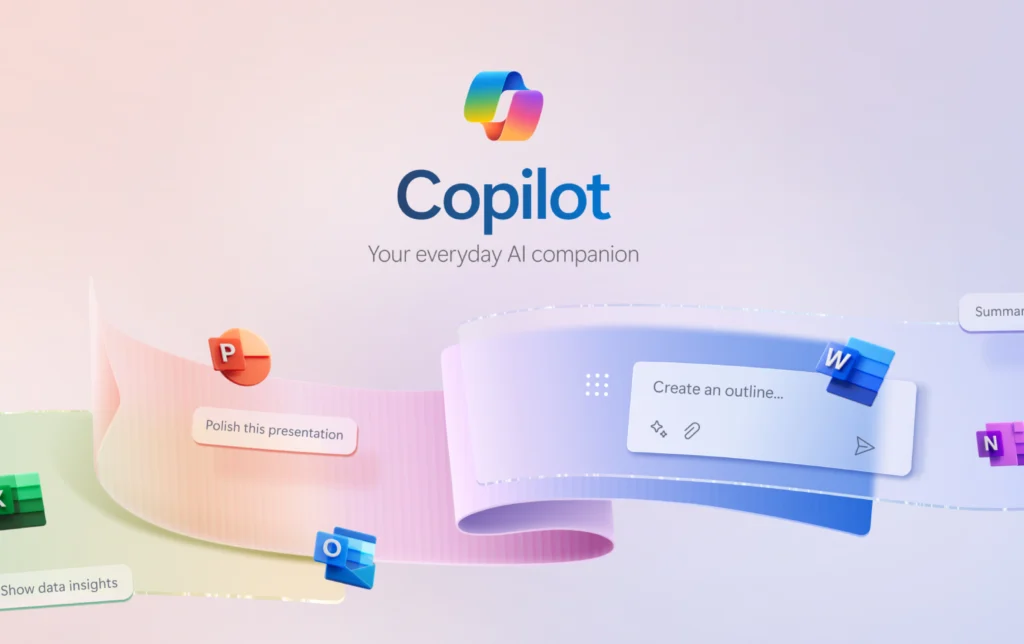
What is Microsoft 365 Copilot?
Microsoft 365 Copilot is Microsoft’s AI assistant embedded across the Microsoft 365 suite — Word, Excel, PowerPoint, Outlook, Teams, SharePoint, and more — powered by GPT-4 large language models and grounded in organizational data via Microsoft Graph. It enables users to draft documents, summarize meetings, analyze data, and automate workflows using natural language instructions within the tools they already use.
How Companies Can Adopt These 2026 AI Features Efficiently
Implementation approach matters.
Step 1: Identify department workflows
Examples:
-
- Sales – proposal workflows
- Finance – reimbursement reporting
- Delivery – weekly status updates
- HR – policy Q&A agents
Step 2: Build standard agents inside Copilot Studio
Start with:
-
- FAQ Answer Bot
- Document Summary Bot
- Executive Report Bot
- Task Assignment Bot
Step 3: Integrate with Teams Recaps → SharePoint storage
This creates automated documentation.
Final Takeaway: Microsoft 365 in 2026 is No Longer a Toolset — It’s a Productivity Operating System
Organizations that adopt early will see:
-
- Lower administrative burden
- Faster revenue cycles
- Clearer management visibility
- Stronger compliance
- Reduced dependency on manual specialists
If your business wants to move from work-logging to work-automated execution — 2026 is the right time.
Key Takeaway
This article catalogues the significant AI capability expansions Microsoft added to Microsoft 365 throughout 2026, organized by executive impact: Copilot in Teams (real-time meeting transcription, action item extraction, catch-me-up for missed meetings), Copilot in Excel (natural language data analysis, Python integration, AI-generated charts), Copilot Pages (AI-synthesized multi-source documents), Copilot Studio for custom agent building, Microsoft 365 Semantic Index (AI-powered organizational knowledge search), and new Copilot governance controls for IT administrators. Each feature is assessed for enterprise readiness and ROI.